
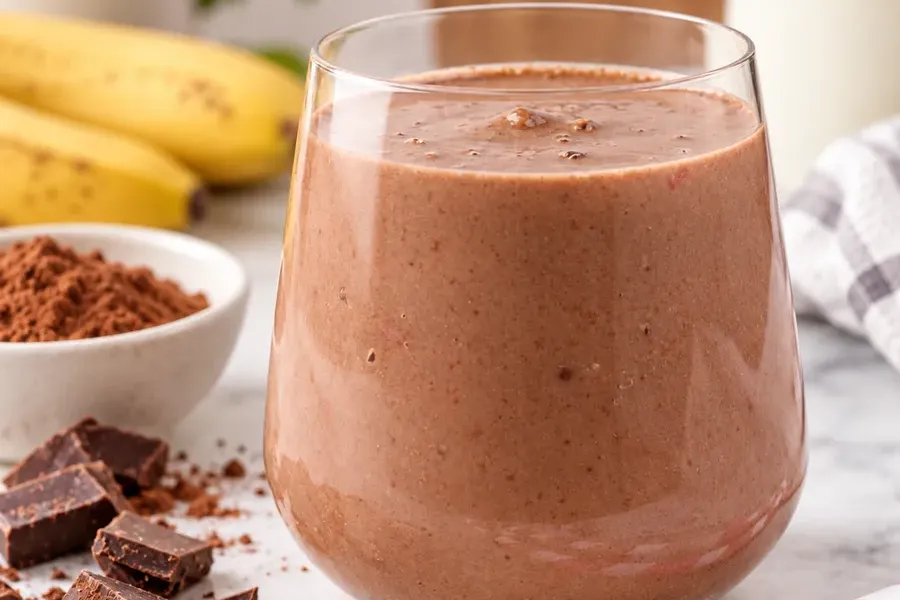
Protein shakes for weight loss: do they work?
Protein shakes for weight loss can help as a snack within your daily calories. We don't recommend using a protein shake as a meal replacement. A protein shake isn't made to the conditions UK law sets for meal replacements. A meal replacement that meets those conditions is made to replace a main meal on a calorie-controlled diet.
Key points:
- Meal replacements for weight control must meet set legal conditions on calories, protein, fat, vitamins and minerals. A protein shake doesn't have to.
- UK reference intake is 0.75 g per kg a day. Weight-loss research uses about 1.2 to 1.6 g per kg.
- We don't recommend using a protein shake as a meal replacement. It can work as a snack within your daily calories.
- Weight loss still needs a calorie deficit. A shake added on top of your usual food adds calories. Shakes aren't for everyone (see the Check first box below).
Can protein shakes for weight loss replace a meal?
No. We don't recommend using a protein shake as a meal replacement. A protein shake can help as a snack within your daily calories. A meal replacement is a different product, made to set conditions so it can stand in for a main meal.
Meal replacement or protein shake: the short version
| Meal replacement for weight control | Protein shake | |
|---|---|---|
| What it's for | Replacing a main meal on a calorie-controlled diet | Topping up protein |
| Conditions set in law | Per meal: 200 to 250 kcal, set protein and fat levels, at least 30% of the reference values for vitamins and minerals2 | No calorie, vitamin or mineral conditions |
| Can it carry the weight-loss claim? | Yes, when it meets the conditions2 | No |
| Where it fits | One or more main meals a day, on a structured plan | A snack within your daily calories, or after exercise |
UK law sets conditions a meal replacement must meet before it can carry the weight-loss claim.
The authorised claims are: "Substituting one of the main daily meals of an energy-restricted diet with a meal replacement contributes to the maintenance of weight after weight loss." "Substituting two of the main daily meals of an energy-restricted diet with meal replacements contributes to weight loss."2
Shake That Weight meal replacements meet these criteria when made as directed, for example our Vanilla shake made with 250 ml skimmed milk. A protein shake isn't made to these conditions, so it can't carry the claim.
A protein shake fits as a snack within your daily calories, or after exercise. For example, it could go in the 200 kcal snack slot of a plan. It's a quick way to raise protein if you don't have time to cook. Remember that adding one on top of everything you already eat adds calories. High protein, low calorie foods give you other ways to reach your protein target.
If you want a shake to replace a meal, choose one made to the meal-replacement conditions. Our meal replacement shakes give you a set number of calories in every serving, with vitamins and minerals.
If you want a shake to replace a meal, choose a meal replacement. These four meet the UK meal-replacement criteria when made as directed: Vanilla, Strawberry and Banana with 250 ml skimmed milk, Caramel Biscuit with water. They're rated 4.6 to 4.8 out of 5 by customers. Single shakes are £1.99 each, or £1.67 a meal in 30 and 42-meal packs, checked 18 November 2026.
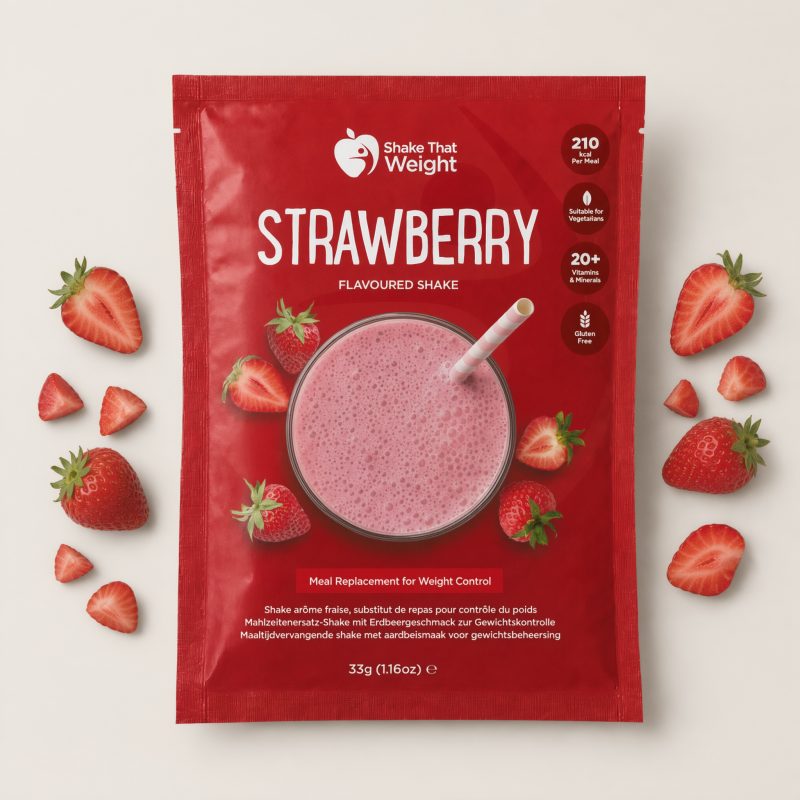
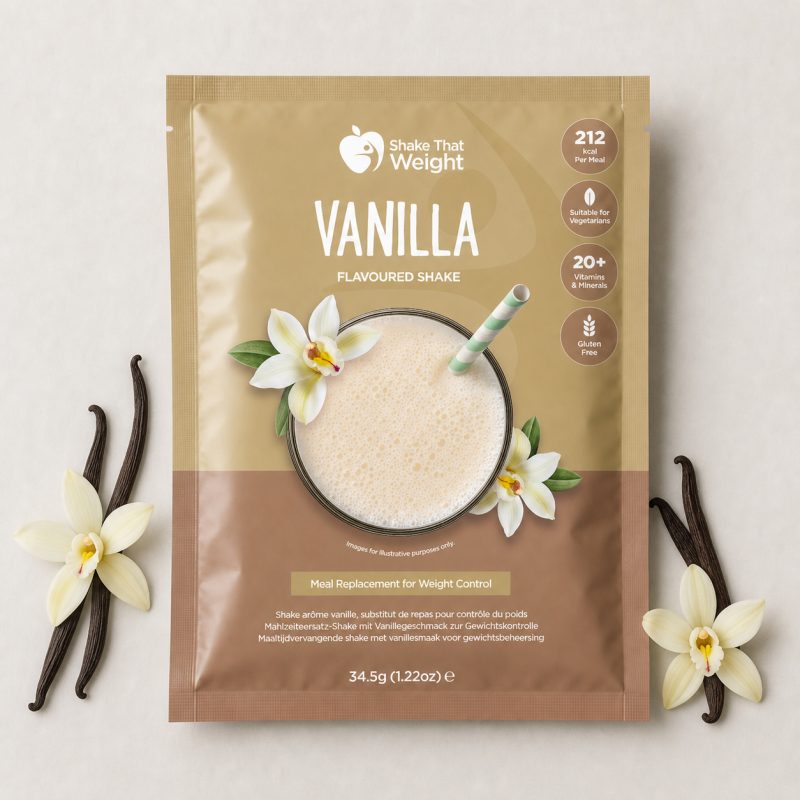
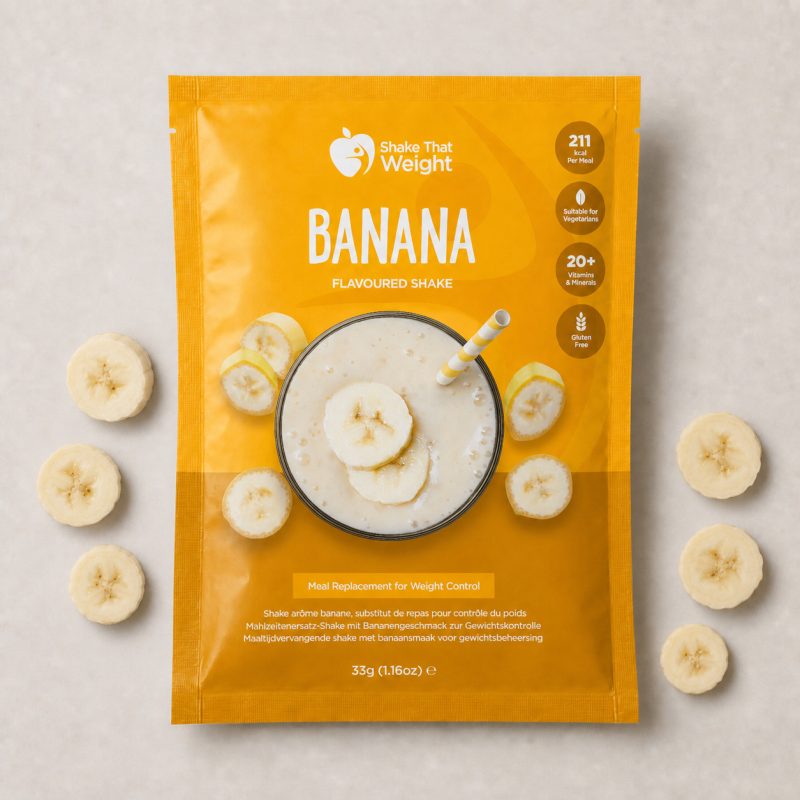
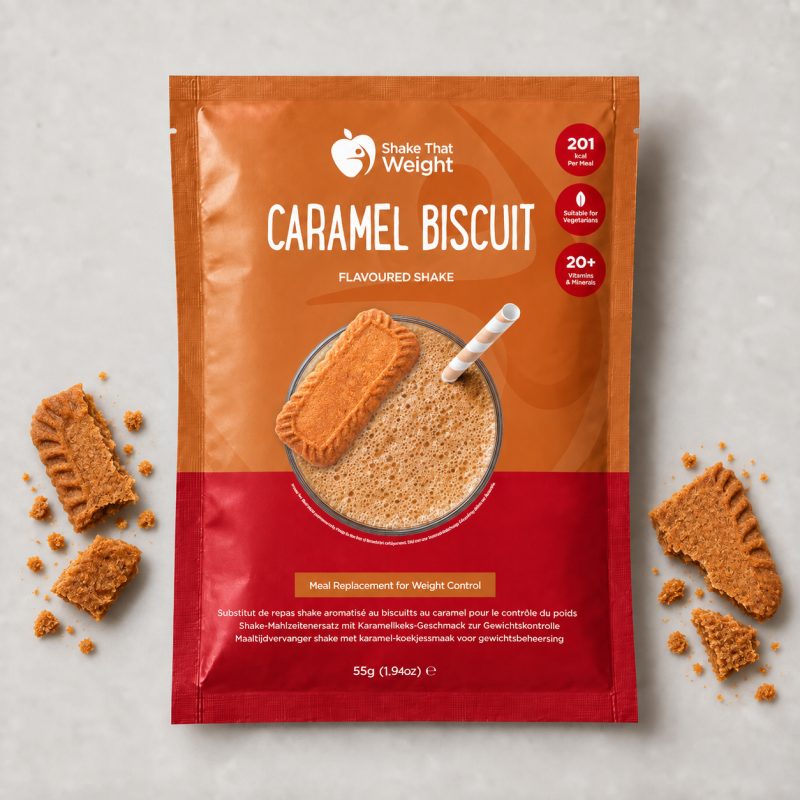
11 flavours in stock (checked 18 November 2026) · One meal per sachet, no scooping or measuring · Mix flavours in one box · Free standard delivery over £65
What customers say about the taste:
“Taste is very nice and very vanillary”
“The strawberry shake and chicken soup are my two favourites, easy to use for work when busy, both taste nice”
“Very tasty”
Product reviews independently collected by Reviews.io, checked 18 November 2026. See all reviews
Why does protein help when you're eating less?
A 2012 analysis of 24 trials found that higher-protein energy-restricted diets gave modest benefits in body weight and fat mass1. They also helped people keep more lean mass during weight loss, with a difference in fat-free mass of 0.43 kg (95% CI 0.09 to 0.78 kg)1.
Adherence explains a lot of the mixed results you see in studies3. Individual results vary.
Protein contributes to the maintenance of muscle mass2. When you eat less, some of the weight you lose can be muscle, not just fat. Getting enough protein helps your body maintain muscle during weight loss, as these trial findings show.

Research also suggests protein may help you feel fuller. A 2015 review found that higher-protein meals can increase satiety, though the evidence does not show an effect on how much you eat at the next meal3.
The authors suggested 1.2 to 1.6 g per kg of body weight a day, and at least about 25 to 30 g of protein per meal, for people trying to lose weight or keep weight off. We look at how this works in a shake in our guide to protein in a meal replacement.
Good to know
Protein alone doesn't create a calorie deficit. If you add a shake on top of everything you already eat, you're adding calories. Read more about why protein matters.
How much protein do you need?
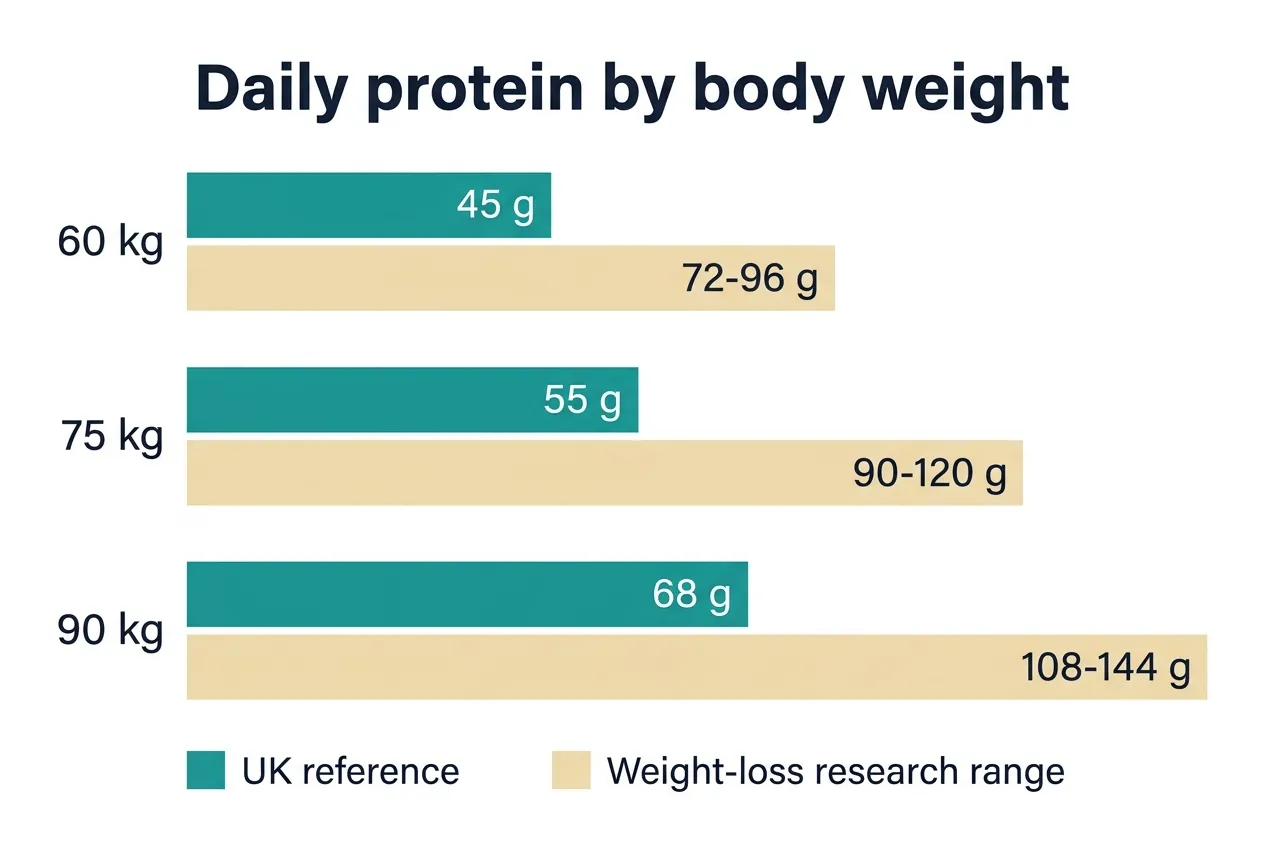
The UK reference intake for protein is 0.75 g per kg of body weight a day for adults4. For a 60 kg woman that's about 45 g a day, and for a 75 kg man it's about 55 g.
Weight-loss research uses higher ranges. The table below shows both the UK reference and the range from weight-loss studies (1.2 to 1.6 g per kg)3.
| Body weight | 0.75 g/kg | 1.2 to 1.6 g/kg |
|---|---|---|
| 60 kg (9 st 6 lb) | 45 g | 72 to 96 g |
| 75 kg (11 st 11 lb) | 55 g | 90 to 120 g |
| 90 kg (14 st 2 lb) | 68 g | 108 to 144 g |
The higher range comes from research on weight-loss diets, not a UK recommendation. These are group averages, and individual needs vary.
Check first
Talk to your GP before raising protein if you have kidney disease, are pregnant or breastfeeding, are under 18, have a history of eating disorders, have type 1 diabetes or diabetes managed with insulin or sulfonylureas, or take other medication that might need adjusting. Very low-calorie plans are not suitable if your BMI is under 25. Read our medical and health disclaimer.
Which type of protein shake is best for weight loss?
There is no single best. What matters is what you check on the label: protein per serving, calories, sugar and what else is added. Whichever type you pick, use it as a snack within your daily calories, not in place of a meal.
Whey and whey isolate
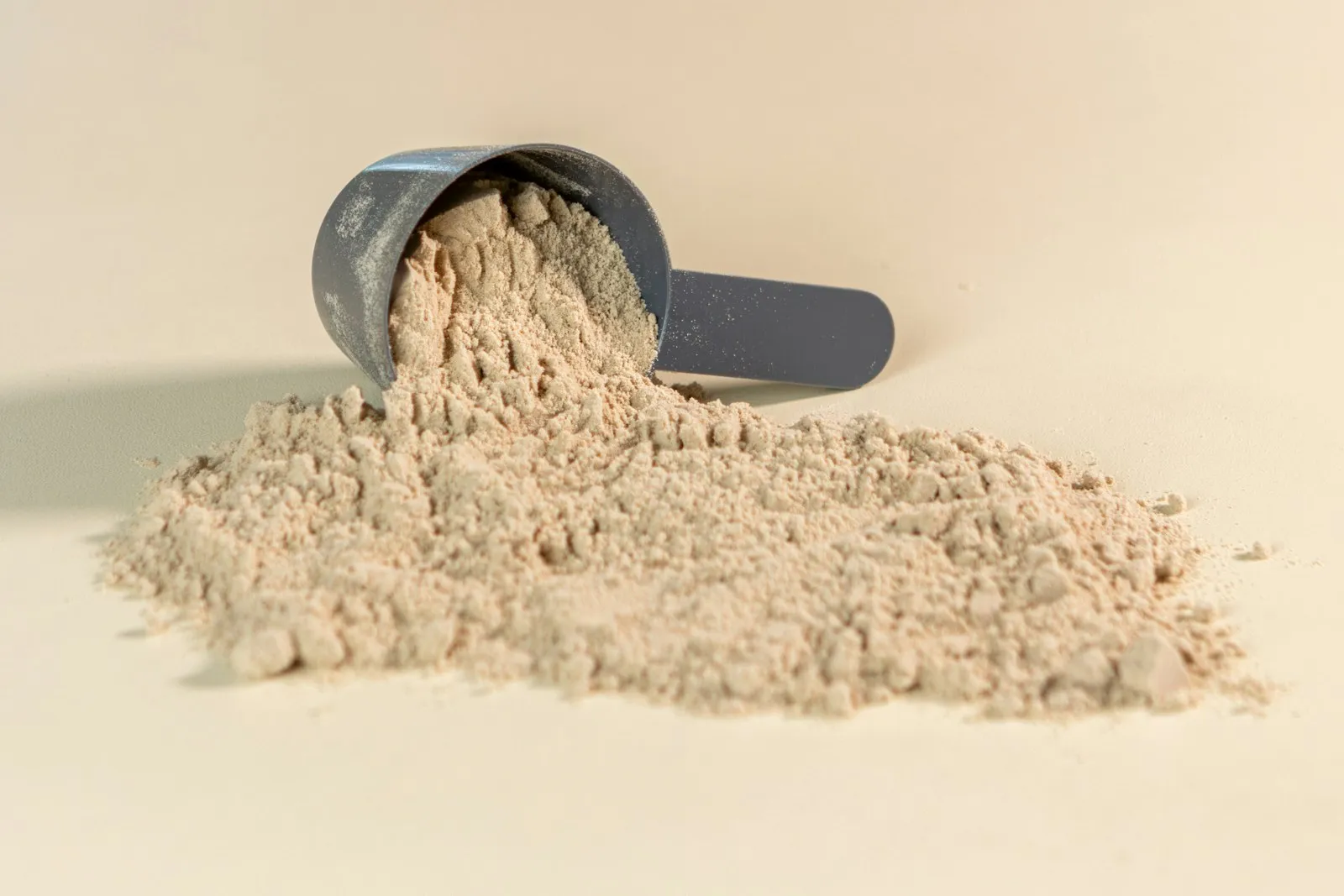
Whey is milk protein, separated during cheese-making. It digests quickly. Whey isolate is a more refined version with less lactose and fat.
One popular whey powder gives 114 kcal and 22 g of protein per scoop (up to 23 g depending on flavour)5. If you're not dairy-free and don't have lactose intolerance, whey is a practical choice.
Pea and plant blends
Pea protein is a common plant option in weight-loss shakes. It's dairy-free, though on its own it's lower in some amino acids than whey. Many plant shakes blend pea with rice, hemp or other proteins to balance the amino acid profile.
Calorie and protein content vary by brand. Check the label for protein per serving and added sugars.
"Diet" shakes from sports brands
Some sports nutrition brands sell "diet" whey or "lean" protein powders with added ingredients like green tea extract or L-carnitine. These powders don't have to meet the meal-replacement conditions, so they can't make the meal-replacement weight-loss claims. They're not meal replacements.
The protein content is usually similar to standard whey. Judge them on the same label points as any protein powder: protein per serving, calories and sugar.
How do protein shakes and meal replacements compare?
A protein shake is a protein top-up, while a meal replacement is made to stand in for a whole meal. One popular whey powder gives 114 kcal and 22 g of protein a scoop in water5, with no rules on vitamins, minerals or fibre. It's a snack, not a meal.
In the UK, a meal replacement can only make the authorised weight-loss claims above if each meal meets set conditions: 200 to 250 kcal, protein 25 to 50% of the energy, fat no more than 30% of the energy, and at least 30% of the reference values for vitamins and minerals.
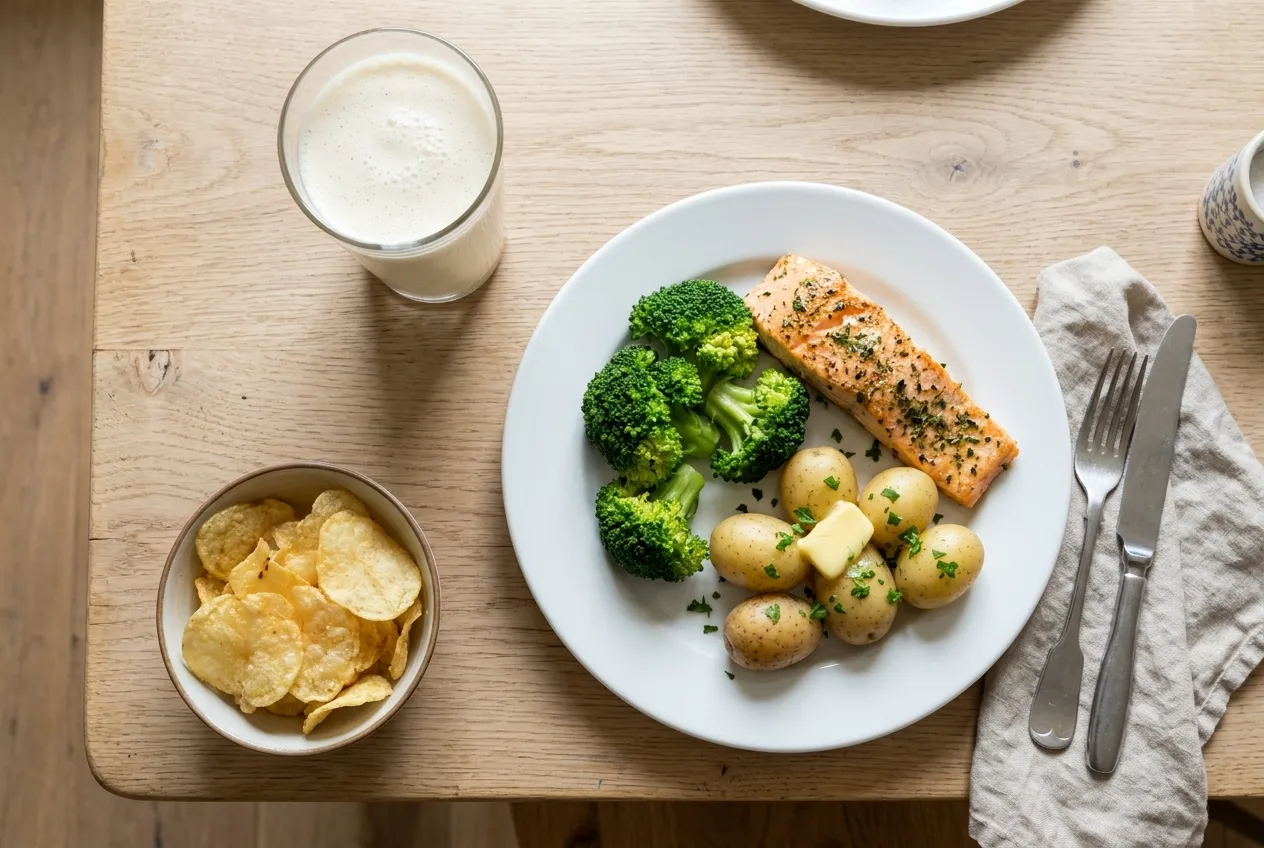
The table below compares a typical whey protein shake, a meal replacement shake and a normal meal.
| Protein shake (whey scoop in water) | Meal replacement shake (STW, with 250 ml skimmed milk) | Normal meal | |
|---|---|---|---|
| Typical kcal | 114 (one popular brand, checked 10 November 2026)5 | 212 Vanilla, 210 Strawberry (checked 18 November 2026)6 | About 400 in the STW Everyday Plan7 |
| Typical protein | 22 g, up to 23 g by flavour5 | 20.7 g Vanilla, 19.6 g Strawberry6 | Varies |
| Vitamins and minerals | None required | 20+ (23 listed), 30%+ of daily needs per meal6 | Varies |
| Fibre | Varies by brand | 2.5 g Vanilla, 3 g Strawberry6 | Varies |
Figures are per brand and vary by flavour. Meal replacement figures are as prepared with 250 ml skimmed milk.
If you want the structure of a meal with a set number of calories and vitamins and minerals at the levels the conditions set, per meal, a meal replacement does that. A protein shake doesn't. Read more about how meal replacements work.
Why choose Shake That Weight
The tables above compare product types fairly. This is where we make our own case.
- Our shakes are meal replacements, made to the UK criteria when made as directed, so they can stand in for a main meal
- Every meal in its own sachet, with no scooping, measuring or weighing, and easy to carry so a meal is always to hand
- 11 flavours in stock (checked 18 November 2026), mixed in one box however you like
- 4.5 out of 5 from 20,548 independently collected reviews
- 500,000+ customers since 2012, as a regulated UK food company
- Diet plans designed by a registered dietitian
- £1.67 a meal in 30 or 42 packs, free standard delivery over £65 and next working day Express if ordered before 2:30pm
Is a protein shake diet a good idea?
No, not as the whole diet or in place of meals. A protein powder isn't made to meet the meal-replacement conditions, so a day of protein shakes can fall short on fibre, vitamins and minerals.
Replacing most meals with a protein powder skips nutrients your body needs to function. Even our own shake mixed with water, about 125 kcal, is not a full meal replacement.
Good to know
A protein shake works as a snack, counted within your daily calories. If you already eat sensibly and want something quick between meals, a shake or a protein snack such as crisps or wafers may be all you need. Browse our high protein snacks.
A shake is useful when it solves a problem: you need something quick between meals, you want to raise protein after the gym, or you don't have time to cook. It's not useful when it replaces real food that would give you nutrients a shake doesn't.
For many people, a protein shake plus normal food is the right balance. Our high protein meals guide has ideas.
When should you choose a meal replacement?
Four cases where a meal replacement fits and a protein shake doesn't:
- You want fixed calories without counting. A meal replacement gives you the same kcal and nutrients every time. You know what you're eating without weighing portions.
- You skip meals. If you often skip breakfast or lunch because you're busy, a meal replacement is a full meal you can make in a minute. For something grab-and-go, meal bars fit in a bag.
- You need nutrients covered in a deficit. A meal replacement covers vitamins, minerals and fibre that a protein shake doesn't. The Total Plan uses four meal replacements a day, so every meal is planned for you, while the Everyday Plan combines two meal replacements with one meal you choose.
- You want a plan with structure. Research from 2019 found that meal-replacement programmes led to an average of 1.44 kg more weight lost at one year than alternative diets, across 23 trials with 7,884 adults8. The effect was larger when participants had enhanced support, and individual results vary.
If you're already happy counting calories and eating balanced meals, a protein shake as a snack alongside those meals may be all you need. If you want the structure taken care of, a plan with meal replacements does that.
If you're weighing up products, our guide to the best meal replacement shakes explains what to look for. To keep a daily shake interesting, try our protein shake recipes.
Want every meal planned?
The Total Plan gives you 800 kcal a day from four meal replacements. Check with your GP before you start.
Want to keep one normal meal?
The Everyday Plan gives you 1,000 kcal: two meal replacements, one meal you choose (about 400 kcal), and 200 kcal of snacks.
Training as well?
The Active Plan gives you 1,200 kcal, built for people doing 150 minutes of exercise a week.
What if you train as well?
The Active Plan is built for people training. It gives you 1,200 kcal a day: two meal replacements, one cooked meal, and 200 kcal of snacks9. The 200 kcal snack slot is where a protein shake or protein snack sits.

The plan is built around 150 minutes of exercise a week. The research range of 1.2 to 1.6 g per kg a day and about 25 to 30 g a meal is a useful guide3. A shake after training is a practical way to top up protein.

On training days, aim for 2 to 2.5 litres of fluid a day9. Water, tea and coffee all count.
Make a shake your meal
If you want a shake to replace a meal, the Everyday Plan uses two meal replacements a day plus one meal you choose. Protein shakes can still be your snack. Every meal comes in its own sachet with nothing to measure, 11 flavours in stock, and free standard delivery over £65 or next working day Express if ordered before 2:30pm.
Are protein shakes good while losing weight?
Which protein shake should I choose for weight loss?
What shakes do the NHS use for weight loss?
Can I have a protein shake as well as a meal replacement?
Whey or plant protein: which should I choose?
Can protein shakes replace meals?
Sources
- Wycherley TP, Moran LJ, Clifton PM, Noakes M, Brinkworth GD. Effects of energy-restricted high-protein, low-fat compared with standard-protein, low-fat diets: a meta-analysis of randomized controlled trials. American Journal of Clinical Nutrition. 2012;96(6):1281-1298. https://doi.org/10.3945/ajcn.112.044321, accessed 10 November 2026.
- Assimilated Regulation (EU) No 432/2012, Annex (list of permitted health claims, as amended including by Regulation (EU) 2016/1413): entries for protein ("Protein contributes to the maintenance of muscle mass", for food that is at least a source of protein) and for meal replacement for weight control. https://www.legislation.gov.uk/eur/2012/432/annex, accessed 10 November 2026.
- Leidy HJ, Clifton PM, Astrup A, et al. The role of protein in weight loss and maintenance. American Journal of Clinical Nutrition. 2015;101(6):1320S-1329S. https://pubmed.ncbi.nlm.nih.gov/25926512/, accessed 10 November 2026.
- British Heart Foundation. Protein: how much do you need? https://www.bhf.org.uk/informationsupport/heart-matters-magazine/nutrition/ask-the-expert/how-much-protein, page updated 6 August 2026, accessed 10 November 2026.
- Myprotein. Impact Whey Protein. https://www.myprotein.com/p/sports-nutrition/impact-whey-protein/10530943/, checked 10 November 2026.
- Shake That Weight. Vanilla, Strawberry, Banana and Caramel Biscuit shake product pages, Shakes range page, Reviews (Reviews.io) and Delivery pages. https://www.shakethatweight.co.uk/shop/shakes/, https://www.shakethatweight.co.uk/reviews/, https://www.shakethatweight.co.uk/delivery/, checked 18 November 2026.
- Shake That Weight. Everyday Plan. https://www.shakethatweight.co.uk/everyday-plan/, checked 10 November 2026.
- Astbury NM, Piernas C, Hartmann-Boyce J, Lapworth S, Aveyard P, Jebb SA. A systematic review and meta-analysis of the effectiveness of meal replacements for weight loss. Obesity Reviews. 2019;20(4):569-587. https://pubmed.ncbi.nlm.nih.gov/30675990/, accessed 10 November 2026.
- Shake That Weight. Active Plan. https://www.shakethatweight.co.uk/active-plan/, checked 10 November 2026.
- NHS England. NHS Type 2 Diabetes Path to Remission Programme. https://www.england.nhs.uk/diabetes/treatment-care/diabetes-remission/, accessed 10 November 2026.
- NHS Better Health. How to lose weight. https://www.nhs.uk/better-health/lose-weight/, accessed 10 November 2026.
Last updated: 18 November 2026.
Written by the Shake That Weight team and reviewed by Matthew Cooper, Director and Founder. Read our editorial standards.
Read our medical and health disclaimer.