
Life after weight loss injections: how to keep the weight off
Last reviewed 7 October 2026
When a weight loss injection stops, so does its effect on appetite. The medication clears, hunger returns, and the structure the drug was giving your eating has to come from somewhere else. This page is about what holds your results in place once the injection is behind you — the protein, the routine, and the meals where the decisions are already made.
- Calorie-known portions
- High in protein
- 20+ vitamins and minerals
- Alongside your own cooking
Free UK delivery · 30-day flavour guarantee
At a glance
- would need invented labels. Items are editable one by one; do not wrap the
- Appetite returns as the medication clears from your system, so your eating structure has to do the job it was doing.
- Published trials describe substantial average regain of lost weight after a weight loss injection is stopped.
- Protein and resistance exercise protect the lean mass that helps keep your metabolism up.
- A meal replacement plan is a proven way to lose weight — on the injection, as you come off, or on its own.
- When, how and whether to stop is a decision for your prescriber. Nothing here is advice on it.
- in editable=”rich”. –>
What happens to your weight when you stop?
Some of the weight you lost on a weight loss injection usually comes back after you stop. The published trial literature shows this clearly; it is not a personal failing. Appetite returns, lean mass is lower than when you started, and the eating habits that would hold you steady under hunger had little chance to form while the drug was doing the work.
Two trials show the pattern directly. In SURMOUNT-4 (Aronne et al., JAMA, 2024), adults who had lost weight on a once-weekly GLP-1 (glucagon-like peptide-1) medicine were randomised to continue it or switch to a placebo. Over the next 52 weeks, the placebo group’s weight changed by a mean of +14.0%, while those who continued treatment lost a further 5.5%.[1]
In the STEP 1 trial extension (Wilding et al., Diabetes, Obesity and Metabolism, 2022), participants were followed for a year after stopping a different once-weekly GLP-1 medicine. In the authors’ words, they regained two-thirds of their prior weight loss.[2]
Three mechanisms are commonly described behind that average:
- Appetite returns. As the drug clears, portions and snacking are no longer held in check by the medication.
- Lean mass is lower. Rapid weight loss costs muscle and other lean tissue as well as fat, and lean mass helps keep your resting metabolic rate — the energy your body uses at rest — up.
- Habits had little to practise on. While appetite is suppressed, portion judgement and eating routines rarely get tested, so there is less to fall back on.
These are group averages, and individual results vary. The practical response is to put structure in place before appetite returns, rather than wait and see.
Should you come off gradually?
That is a question for your prescriber, not for us. Whether to stop, when to stop and whether to step down gradually depend on your health, your medication and your goals. The decision and the schedule belong to the person who prescribed it. We do not give advice on stopping, dosing or tapering.
What we can help with is the food side, whichever route your prescriber chooses. Planning your protein, your meal structure and your routine ahead of time means appetite returning is something you have prepared for, rather than something that catches you out.
A useful question to take into your appointment is what to expect from your own appetite as the medication clears, and how you will be monitored afterwards.
How much protein do you need after stopping?
There is no single figure that suits everyone, and your prescriber or a dietitian can set a personal target. For healthy adults, the British Heart Foundation gives a baseline of 0.75g of protein per kg of body weight a day, with higher figures for older adults, people who train hard, and people taking GLP-1 medication.[3]
Protein matters at this point because it helps protect lean mass, and lean mass is what keeps resting metabolic rate up. The same BHF guidance suggests 1g to 1.5g per kg of adjusted body weight a day, with a minimum of 60g, for people taking a GLP-1 medication.[3] That figure describes use alongside the medication; for after stopping, ask your dietitian or prescriber what suits you. Spreading protein across the day, rather than leaving it all to dinner, also makes any target easier to reach when appetite is still smaller than it was.
Resistance exercise is the second lever. The NHS advises muscle-strengthening activities that work all the major muscle groups on at least two days a week.[4] Protein gives muscle the material to hold on; strengthening gives it a reason to.
<!– Static markup, deliberately: a real
| Lever | What it does | A practical start |
|---|---|---|
| Protein at breakfast | Spreads protein across the day rather than leaving it all to dinner | Eggs, Greek yoghurt, a high-protein porridge or a shake |
| Protein at every main meal | Keeps intake steady on days when appetite varies | A clear protein source on the plate each time |
| A meal replacement | Set protein and 20+ vitamins and minerals in a portion-controlled meal | Swap it in for the meal where you’re most likely to drift |
| Strengthening on two days a week | Gives the muscle you have kept a reason to stay | Weights, resistance bands or bodyweight work |
If you are still taking the medication, our page on support while you’re on it covers that stage in more depth.
What do meal replacements do on a weight loss injection, and after you stop?
Weight loss comes from eating less. A GLP-1 injection makes that easier by lowering appetite — but the medication is the trigger, not the eating. A meal replacement diet is the controlled way to eat less: known calories, protein, 20+ vitamins and minerals, portions you don’t have to judge. On the injection or after it, this is the actual weight loss plan.
Same food, two different jobs. On the injection, it keeps a small appetite nutritionally complete. After you stop, it keeps the eating decisions out of your hands at the moments you are most likely to drift.
While you’re on it
A GLP-1 injection reduces appetite, so the risk is under-eating. The weight loss itself comes from the reduced calorie intake, not the medication — but less food leaves less room for the protein, vitamins and minerals your body still needs. A 2026 review in Clinical Obesity reported inadequate calcium and iron intake, and protein shortfalls, in people on GLP-1 medication, mostly from observational data.[6]
A 200-250 kcal meal replacement, high in protein and with 20+ vitamins and minerals, is how you reduce calories without reducing nutrition. It is a weight loss plan that works alongside the medication, doing its own job. support while on a GLP-1 injection.
The handover
The product does not change when you stop. The job it is doing changes. As the medication clears, the problem moves from getting enough in to judging how much, under hunger.
Appetite, portions and routine all shift at once, so keeping the meals you already use means one less thing changing. The flavours are chosen, the habit is running, and the hungry moments are already covered.
After you stop
Once appetite is back, the same meal does a structural job. The portion is set, the calories known, the protein built in — the decision was made before you were hungry. You do not need a fresh answer at every hungry moment. Why structure replaces appetite suppression sets out the mechanism.
| While you’re on it | After you stop | |
|---|---|---|
| Appetite | Small | Returning |
| The problem | Getting enough in | Judging how much, under hunger |
| The meal’s job | A floor on protein, vitamins and minerals | A decision made before you’re hungry |
If you are still on the medication, starting now means the habit is already in place when appetite returns, with no new routine to figure out under pressure. Your prescriber still leads any decision about the medication. The Everyday Plan sets two meals a day and leaves one for you to cook, which is the shape the routine ends up in anyway.
Why does structure replace appetite suppression?
Once the medication clears, those eating decisions come back to you. Portion-controlled, calorie-known meals take over that same job: the thinking is done in advance, so you are not relying on judgement while hungry. This is a weight loss plan in its own right — the structured, nutritionally complete way to actually do the eating-less part of losing weight.
To be clear: no meal, shake or supplement we sell replaces or replicates a prescription medicine, and none of them keeps the drug’s effect going. What a meal replacement does well is take one category of decision off the day — the one appetite suppression used to handle for you.
A meal replacement has limits, and it is better to say so. It does not change why you reach for food when stressed, bored or tired. It does not build muscle; protein and strength work do that. What it does is take the eating decisions out of the moment, keep your calorie intake controlled, and make sure the nutrition stays adequate.
Three features do the work.
Portions are set
The amount is decided before you are hungry. There is nothing to negotiate at the cupboard.
Calories are known
Each meal carries a stated calorie count, which takes the guesswork out of a day’s eating.
Protein is built in
Each meal is built around protein and comes with 20+ vitamins and minerals.
Used as directed, a meal replacement helps maintain weight after weight loss.* If you would rather not cook at all on some days, ready meals for injection users are an option.
*The authorised GB health claim is: “Substituting one daily meal of an energy-restricted diet with a meal replacement contributes to the maintenance of weight after weight loss.” It applies to meal replacements that meet the GB compositional requirements for foodstuffs intended for use in energy-restricted diets. Use as part of an energy-restricted diet, alongside other foods and adequate daily fluid intake.
What does a realistic maintenance day look like?
A realistic maintenance day has four moving parts: protein at breakfast, one or two known-quantity meals, one meal you cook yourself, and a weekly weigh-in. The aim is to remove as many in-the-moment decisions as possible, because appetite is no longer making them for you.
Start with protein.
A protein-led breakfast — eggs, Greek yoghurt or a high-protein porridge — sets up the day and puts protein where it is easiest to forget. If you use a protein powder, this is the meal to add it to.
Keep one or two meals fully known.
Choose a meal replacement or ready meal for the meals where you are most likely to drift, which is often lunch or mid-afternoon. The calories and the portion are fixed, so there is nothing to decide in the moment.
Cook one meal properly.
Dinner stays yours: a clear protein source, plenty of vegetables, and a portion you have weighed often enough that your eye is trained. Normal food and family meals stay in the routine, which is what makes it something you can keep doing.
Weigh weekly and record it.
Use the same scales on the same day at the same time, and log the number in the MyJurnee app. A few pounds then show up as a trend you can act on, rather than a stone you notice months later.
Add two strength sessions a week, and enough sleep, and the routine is complete. It is deliberately dull. Dull is what lasts.
Where do supplements fit in?
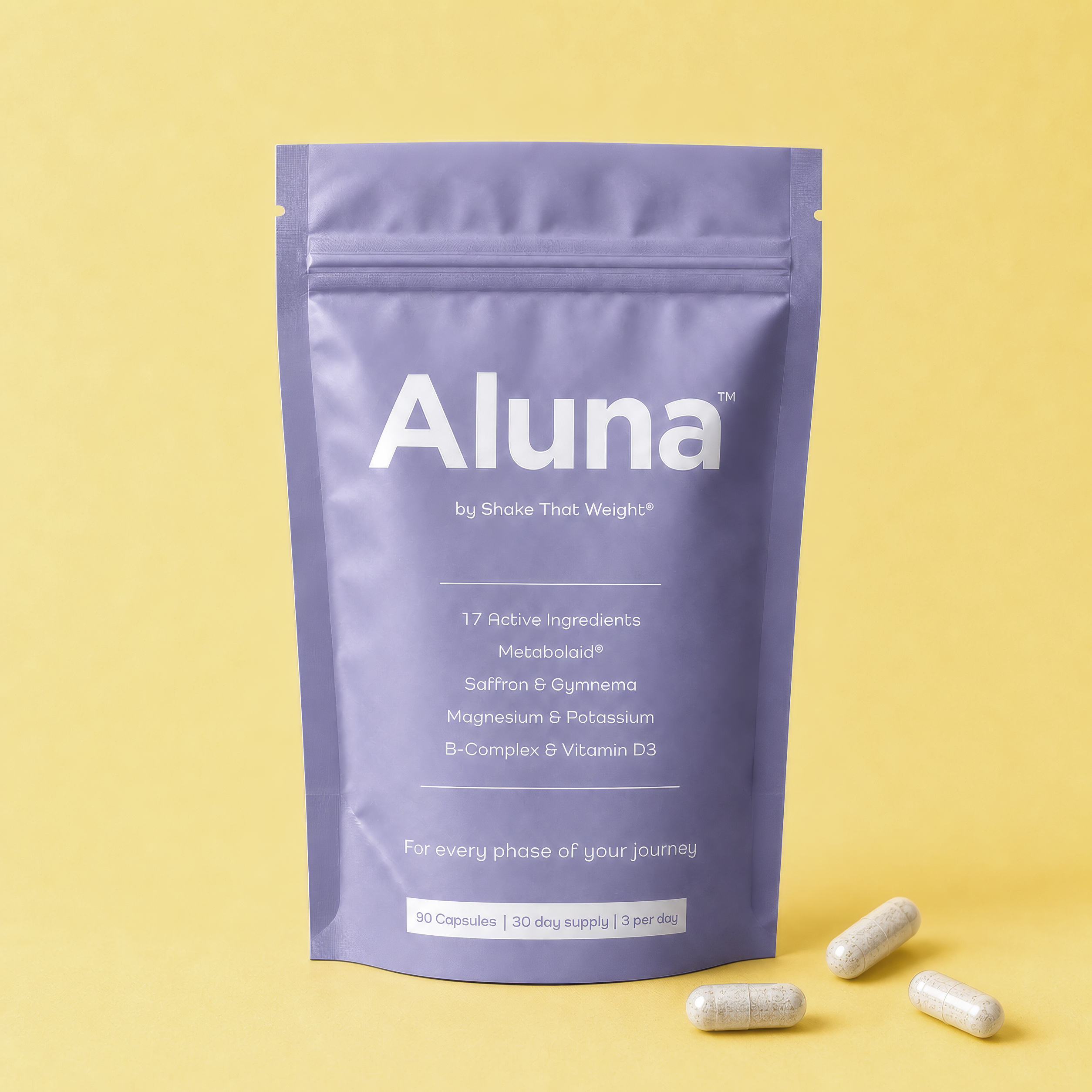
Supplements fill gaps; they do not replace a meal, a prescription, or a plan. Aluna GLP-1 Support is a food supplement, not a medicine: it does not replace or replicate a GLP-1 medication, and it is not a way to keep the drug’s effect going.
Aluna is three capsules a day, taken together with food, and it suits anyone eating less — whether on a weight loss injection, coming off one, or simply cutting back. It is vegan, gluten free and made in the UK. Its authorised nutritional contributions are from chromium, which contributes to the maintenance of normal blood glucose levels*, and B-vitamins, which contribute to the reduction of tiredness and fatigue*.
Metabolaid® is a polyphenol blend of lemon verbena (Lippia citriodora) and hibiscus (Hibiscus sabdariffa), and it carries the most published work of anything in the capsule. In an eight-week randomised, double-blind, cross-over, placebo-controlled trial in 33 overweight and grade I obese adults (Serna et al., European Journal of Nutrition, 2022), the blend was studied for appetite regulation: participants recorded a higher satiety quotient than on placebo, and ate less at a free-choice meal — 774 kcal against 850 kcal.[5] The same trial measured hunger-related hormones including insulin, leptin, ghrelin, adiponectin, peptide YY and GLP-1 — the gut hormone a weight loss injection is designed to imitate.†
Alongside it, Gymnema sylvestre is traditionally used in Ayurveda and researched for its gymnemic acids and their effect on sweet-taste perception. The saffron is a standardised extract at 28mg.† We describe tradition and research; no health claim.†
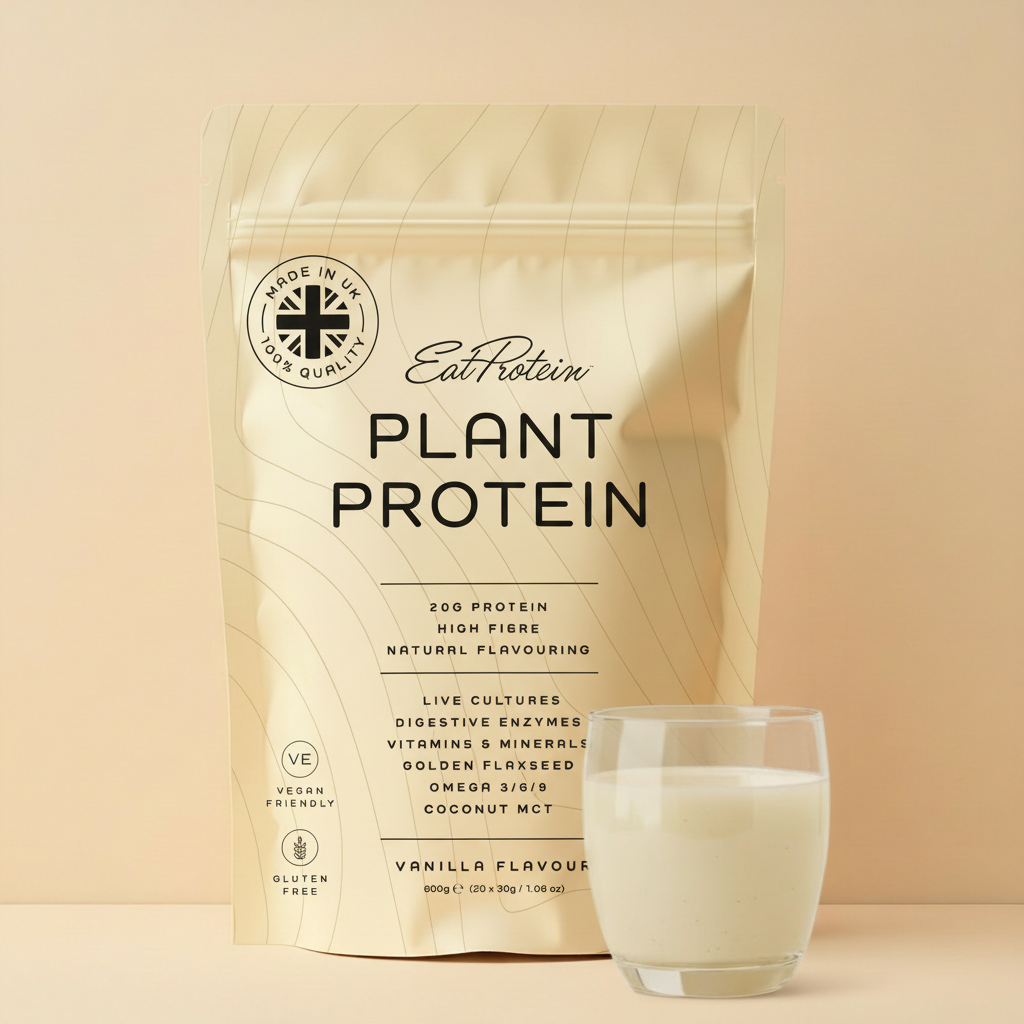
To add protein at breakfast, a plant-based protein powder is one easy option. Aluna is available on Subscribe & Save, monthly, cancel anytime — maintenance has no end date, so a monthly subscription is the honest shape of the offer. Used alongside meals, not instead of them, it is one small daily habit within a wider routine.
Original price was: £29.99.£14.95Current price is: £14.95.
*Authorised GB health claims, applicable at 15% or more of the nutrient reference value per daily serving. †Description of the ingredient’s traditional use and published research; not a health claim for Aluna. Food supplements should not be used as a substitute for a varied, balanced diet. Do not exceed the recommended dose. For adults aged 18 and over. If you are pregnant, breastfeeding or taking any medication, particularly anticoagulants (Aluna contains vitamin K2), consult a doctor before use.
How do you reintroduce normal food without losing control?
Reintroduce normal food one meal at a time, and keep a known-quantity meal in place at the hardest time of day. Changing everything at once removes the structure you have been relying on; changing one meal at a time lets you see what works and gives you a fixed point to come back to.
- Choose one meal to bring back. Start with the easiest — a weekend breakfast, a family dinner — and cook it as you normally would.
- Leave the others as they are. The known meals carry on exactly as before, so most of the day is still decided in advance.
- Review before the next change. Use your weekly weigh-in to see how that one change went, and only then bring back another meal.
Keep a fixed point at the hardest time of day. For some people that is mid-afternoon; for others it is the evening. A meal with a stated calorie count in that slot stops a bad hour turning into a bad day.
The same principle underlies the NHS’s staged return to food at the end of its soups and shakes programme, and it is easy to borrow outside a programme.
What if you’ve already started putting weight back on?
Putting some weight back on is common after stopping a weight loss injection, and it is not a verdict on you. The earlier you notice it, the easier it is to deal with: a few pounds caught on the scales is a different problem from a stone found months later.
Start with information. Weigh yourself at the same time each week for a few weeks, so you are responding to a trend rather than a single reading. If the weight is rising quickly, or you are worried about your health, speak to your prescriber or GP. The same applies if the regain is happening alongside low mood, or around food in a way that worries you — that is exactly what they can help with.
Then put structure back where it slipped. Choose the meal where the drift began and put a known-quantity meal there, bring protein back to breakfast, and get the strength sessions back in the diary. Small, specific changes are easier to sustain than a dramatic restart.
If you would rather have that structure planned for you, the Everyday Plan is built for it: two meal replacements, one meal you cook, and no portions to guess.
As featured in
Daily Mail
Womens Health
The Telegraph
Cosmopolitan
Will I put all the weight back on after stopping?
How long does appetite take to come back?
Can I use meal replacements instead of the injection?
Do I need more protein after stopping than I did before?
Can I take Aluna while I’m still on an injection?
Is it safe to go straight onto a meal replacement plan after stopping?
What if I’m taking medication for something else?
Should I keep weighing myself after I stop?
How long should I stay on a structured plan?
Ready to put the structure in place?
The Everyday Plan gives you two meals a day that are already decided, and leaves one for you to cook. It sits alongside the protein, strength work and weekly weigh-in described above — and your prescriber still leads any decision about the medication.
Free UK delivery · 30-day flavour guarantee

References
-
[1] Aronne LJ, Sattar N, Horn DB, Bays HE, Wharton S, Lin W-Y, Ahmad NN, Zhang S, Liao R, Bunck MC, Jouravskaya I, Murphy MA; SURMOUNT-4 Investigators. Continued Treatment With Tirzepatide for Maintenance of Weight Reduction in Adults With Obesity: The SURMOUNT-4 Randomized Clinical Trial. JAMA. 2024;331(1):38-48. doi:10.1001/jama.2023.24945. Retrieved 6 October 2026 from https://jamanetwork.com/journals/jama/fullarticle/2812936 (abstract and key points: mean percent weight change week 36 to week 88 was -5.5% on continued treatment vs +14.0% on placebo).
-
[2] Wilding JPH, Batterham RL, Davies M, Van Gaal LF, Kandler K, Konakli K, Lingvay I, McGowan BM, Oral TK, Rosenstock J, Wadden TA, Wharton S, Yokote K, Kushner RF; STEP 1 Study Group. Weight regain and cardiometabolic effects after withdrawal of semaglutide: The STEP 1 trial extension. Diabetes Obes Metab. 2022;24(8):1553-1564. doi:10.1111/dom.14725. Retrieved 6 October 2026 via Europe PMC; canonical link https://doi.org/10.1111/dom.14725 (abstract read: one year after withdrawal, participants regained two-thirds of their prior weight loss).
-
[3] British Heart Foundation. Protein: how much do you need? Page last updated 6 August 2026. Retrieved 6 October 2026 from https://www.bhf.org.uk/informationsupport/heart-matters-magazine/nutrition/protein
-
[4] NHS. How to improve your strength and flexibility. Page last reviewed 21 July 2026. Retrieved 6 October 2026 from https://www.nhs.uk/live-well/exercise/how-to-improve-strength-flexibility/
-
[5] Serna A, Marhuenda J, Arcusa R, Pérez-Piñero S, Sánchez-Macarro M, García-Muñoz AM, Victoria-Montesinos D, Cánovas F, López-Román FJ. Effectiveness of a polyphenolic extract (Lippia citriodora and Hibiscus sabdariffa) on appetite regulation in overweight and obese grade I population: an 8-week randomized, double-blind, cross-over, placebo-controlled trial. Eur J Nutr. 2022;61(2):825-841. doi:10.1007/s00394-021-02678-x. Retrieved 6 October 2026 via Europe PMC; canonical link https://doi.org/10.1007/s00394-021-02678-x (abstract read: higher satiety quotient vs placebo; ad-libitum intake 774.44 vs 849.52 kcal; GLP-1 varied p<0.001).
-
[6] Urbina J, Salinas-Ruiz LE, Valenciano C, Clapp B. Micronutrient and Nutritional Deficiencies Associated With GLP-1 Receptor Agonist Therapy: A Narrative Review. Clin Obes. 2026;16(1):e70070. doi:10.1111/cob.70070. Retrieved 6 October 2026 via Europe PMC; canonical link https://doi.org/10.1111/cob.70070 (abstract read: review of six studies covering 480,825 adults; vitamin D deficiency most common; iron depletion frequent; findings derive primarily from observational data).
-
[7] Lean ME, Leslie WS, Barnes AC, Brosnahan N, Thom G, McCombie L, Peters C, Zhyzhneuskaya S, Al-Mrabeh A, Hollingsworth KG, et al. Primary care-led weight-management for remission of type 2 diabetes (DiRECT): an open-label, cluster-randomised trial. Lancet. 2018;391(10120):541-551. doi:10.1016/S0140-6736(17)33102-1. Retrieved 7 October 2026 via the Europe PMC record for the DOI; canonical link https://doi.org/10.1016/S0140-6736(17)33102-1 (authors’ interpretation, abstract: at 12 months, almost half of participants achieved remission to a non-diabetic state and off antidiabetic drugs).