
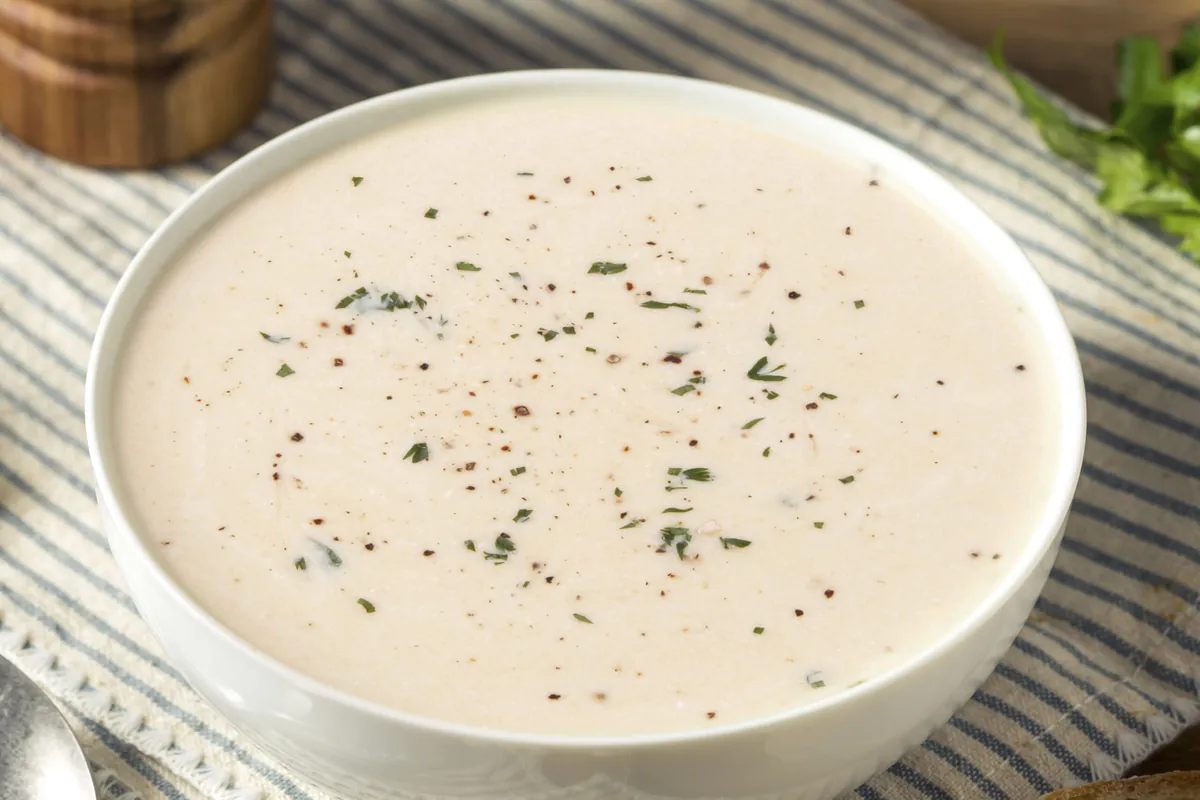
The 800 calorie diet: what it is, who it suits and a 7-day plan
An 800 calorie diet is a low-energy plan providing about 800 calories a day, either from regular food or from total diet replacement products such as shakes, soups and bars. It's normally followed for a limited period, with GP advice first, and not everyone should attempt it. Food goes back in stages afterwards.
Key points:
- Two approaches: food-based (weighing portions) or meal-replacement (the NHS programme uses 800 to 900 kcal of soups and shakes for 12 weeks)
- NICE classes 800 to 1,200 kcal a day as a low-energy diet and says diets at this level should last no more than 12 weeks
- Trial results are group averages and individual results vary
- Coming off matters as much as going on: food is brought back in planned stages
What is the 800 calorie diet?
The 800 calorie diet is a low-energy diet, meaning it provides around 800 calories a day. People follow it to lose weight for a limited time. It is best started with your GP's advice.
There are two main ways to do it. You can carefully weigh regular food. Or you can replace all your meals with total diet replacement products like meal replacement shakes, soups and bars.
Our shakes, soups and bars meet the UK meal-replacement criteria when made as directed. That means milk-range shakes with 250ml skimmed milk, water-range shakes with water, soups with hot water, and porridge with 170ml skimmed milk, all as it says on the pack. We are a regulated UK food company and have made meal replacements since 2012.
NICE classes 800 to 1,200 kcal a day as a low-energy diet, and under 800 kcal as a very-low-energy diet. It says diets at these levels should last no more than 12 weeks and are not a long-term strategy6.
Either way, NICE says the diet should be nutritionally complete and come with support and a plan for afterwards. We look at very low-calorie diets in more detail on a separate page.
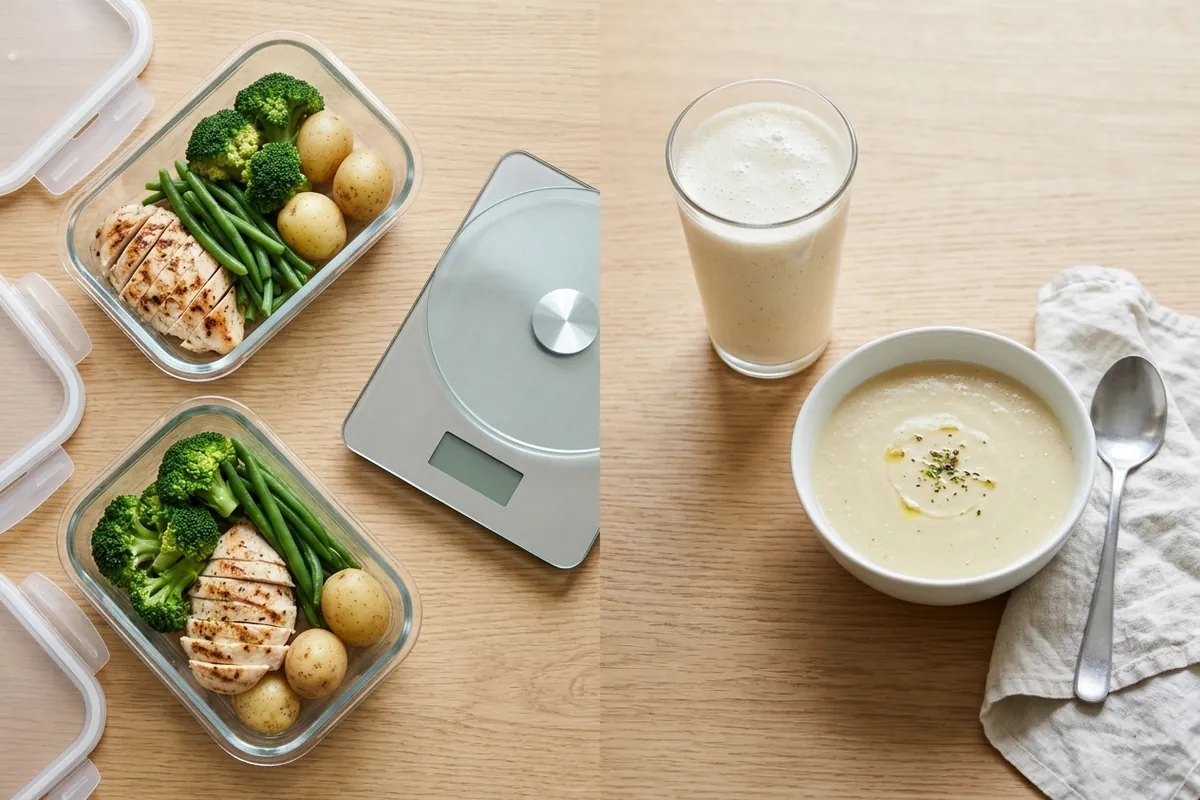
Two of these a day, plus a meal you cook and 200 kcal of snacks, is the Everyday Plan at 1,000 kcal. Four a day is our 800 kcal plan. Each one is a single meal in its own sachet, so there is nothing to weigh or measure.
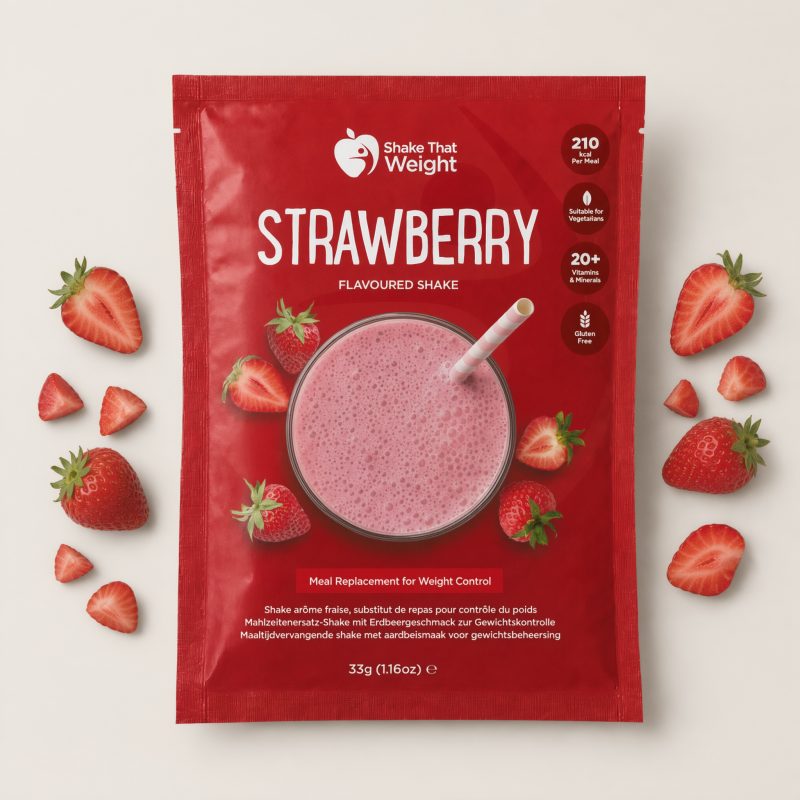
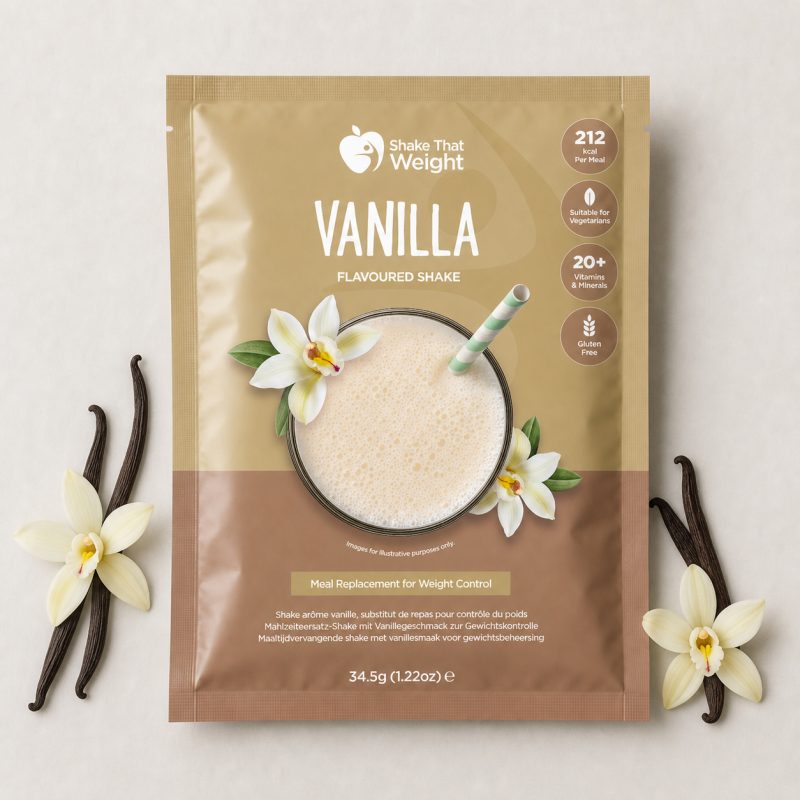
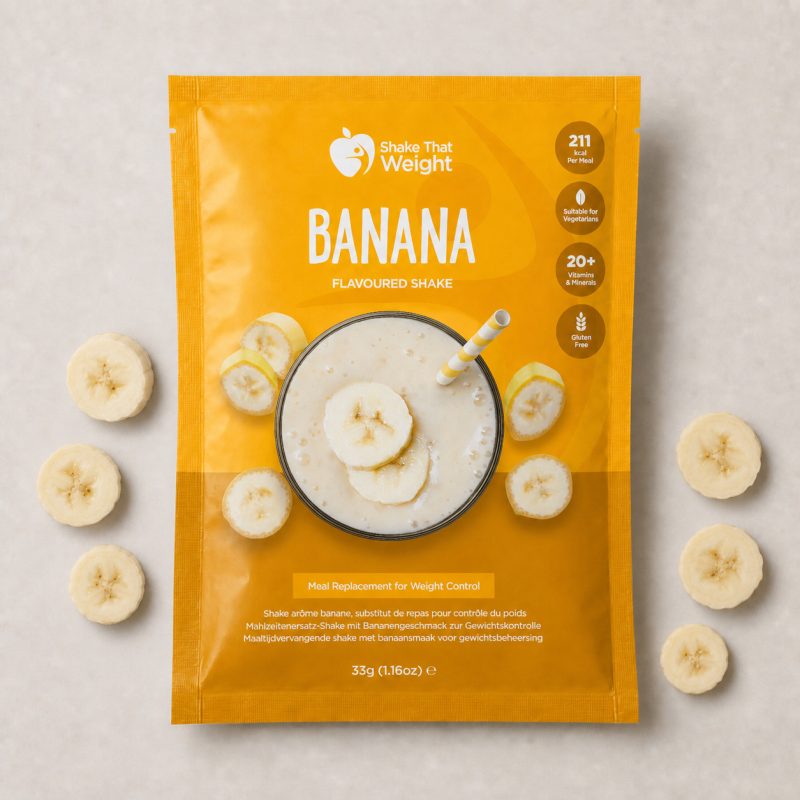

11 shake flavours plus soups, porridge, hot meals and bars · one meal per sachet, nothing to measure · £1.99 a meal, or £1.67 in 30- and 42-meal shake packs · rated 4.5 out of 5 from 20,548 reviews (checked 18 November 2026)
Food-based or meal-replacement: which 800 calories?
The difference is where the 800 calories come from. Food-based means planning and weighing ordinary meals yourself. Meal-replacement means four ready-measured products a day, as in the NHS programme.
NICE says diets at this level should be nutritionally complete6. That is hard to reach from food alone at 800 kcal. Meal replacements that meet the UK criteria give at least 30% of the reference values for vitamins and minerals per meal, when made as directed.
Food-based may suit people who like cooking and don't mind weighing everything. Meal-replacement suits people who want fewer decisions.
Only meal replacements that meet the UK legal conditions can carry the weight-loss claim. A protein shake is not made to replace a meal, so we don't recommend using one that way, though it's fine as a snack.
The table sets out the main differences.
| Food-based 800 | Meal-replacement 800 (TDR) | |
|---|---|---|
| What you eat | Regular food: lean protein, vegetables, small portions of starch. Everything weighed. | Four meal-replacement products a day (shakes, soups, bars or hot meals), plus a small milk allowance. |
| Planning effort | High. Every meal needs calculating. | Low. Each product is a known amount. |
| Nutritional completeness | Depends on your food choices. Hard to meet all vitamin and mineral needs at 800 calories from food alone. | Each meal meets UK meal-replacement criteria when made as directed, including at least 30% of the reference values for vitamins and minerals. |
| Typical duration | No more than 12 weeks, then a gradual increase. | No more than 12 weeks (the NHS programme is 12 weeks), then stepwise food reintroduction. |
| Who supports it | Often self-directed, following plans popularised by books. Some private programmes offer it. | The NHS Type 2 Diabetes Path to Remission Programme. Also used by some weight-management services. |
| Cost per day | Variable. Depends on your food shop. | About £6.68 to £7.96 a day for four shakes, soups or meals (£1.67 to £1.99 each). Bars cost more (checked 18 November 2026). |
| Pros | Feels like "real food". May suit people who dislike shakes. | Simple to follow. No weighing, no calculating. Fewer food decisions. |
| Watch-outs | Easy to underestimate portions. Risk of nutrient gaps. | Repetitive. Some people find shakes filling, others find them unsatisfying. Not suitable if you dislike the format. |
Checked 10 November 2026 from NHS England1, NICE guidance6 and STW product pages9.
Neither approach is risk-free. Both need GP clearance first, particularly if you have diabetes, take regular medication or have a history of disordered eating.
Why choose Shake That Weight
The table above is fair to both routes. If the meal-replacement route suits you, this is where we make our own case.
- Made to the UK meal-replacement criteria when made as directed.
- Every meal is one pre-portioned sachet or bar, so there is no weighing or calculating, and it's easy to carry wherever you go.
- 11 shake flavours (in stock when checked on 18 November 2026) plus soups, porridge, hot meals and bars, mixed and matched across the day however you like.
- Rated 4.5 out of 5 from 20,548 independently collected reviews, so you can see what others thought before you buy.
- 500,000+ customers since 2012, and a regulated UK food company, so we have been doing this a long time.
- Plans designed by a registered dietitian, starting with the 1,000 kcal Everyday Plan if 800 feels daunting.
What is the NHS 800 calorie diet?
The NHS Type 2 Diabetes Path to Remission Programme is a structured 12-month programme for eligible adults with type 2 diabetes. It starts with 12 weeks of total diet replacement at 800 to 900 calories a day, replacing all normal meals with soups and shakes1. After that comes support to reintroduce food, with monitoring up to 12 months1.
Access is through your GP or diabetes team. Eligibility includes a type 2 diabetes diagnosis within the last 6 years and a BMI over 27 (over 25 for people from Black, Asian and other ethnic groups)1. The national evaluation covered people aged 18 to 655.
It's separate from Shake That Weight and we're not part of it.
Can you do the NHS 800 calorie diet without a referral? No, the programme itself is by referral only. People outside the programme who choose an 800 kcal plan should still speak to their GP first, because NICE says diets at this level should come with support6.
If you have diabetes and are considering meal replacements, speak to your GP or diabetes nurse first, particularly if you take insulin or certain other medications. Our guide to diabetes and shakes covers this in more detail.
How much weight can you lose on 800 calories?
It depends on the person, and no amount is promised. Published trial results give us group averages, with wide individual variation. For meal replacement plans in general, see how much weight to expect.
| Study | Participants | Duration | Average weight loss | Notes |
|---|---|---|---|---|
| DiRECT (12 months)2 | 149 in intervention group | 3 to 5 months at 825 to 853 kcal/day TDR, then reintroduction | Mean 10.0 kg at 12 months (intervention) vs 1.0 kg (control); 46% in remission at 12 months | Primary outcomes were diabetes remission and weight loss of 15 kg or more. |
| DiRECT (24 months)3 | Same cohort | 24 months | 11% lost 15 kg or more; 36% in remission at 24 months | Regain common in second year. |
| DROPLET4 | 278 adults with obesity | 8 weeks at 810 kcal/day, then reintroduction | Mean -10.7 kg at 12 months (intervention) vs -3.1 kg (usual care) | Part-funded by Cambridge Weight Plan. |
| NHS pilot (Valabhji 2024)5 | 450 completers with paired data | 12 weeks TDR, NHS programme | Mean weight loss 14.4%; 32% in remission | Real-world results lower than trials. |
Individual results vary. Trial participants had clinical supervision throughout.
At 12 months, average losses in the DiRECT and DROPLET intervention groups were around 10 kg. The comparison groups lost 1.0 kg and 3.1 kg. These are group averages for 800 calorie diet results.
In the NHS pilot, remission was lower than in the trials.
We can't promise any amount or pace, because it depends on the person. The trial figures above are averages over a year, not a month.
Regains are common after diets at this level if habits don't change36. The trials paired the diet with support and a planned return to food. DiRECT's 24-month results show weight can creep back3.
A 7-day 800 calorie meal plan (two versions)
Here are two versions of the same week. Version A uses four meal replacements a day. Version B uses three plus one food meal.
Both come to about 800 kcal. Check how our plans work before you start.
Version A: four meal replacements a day
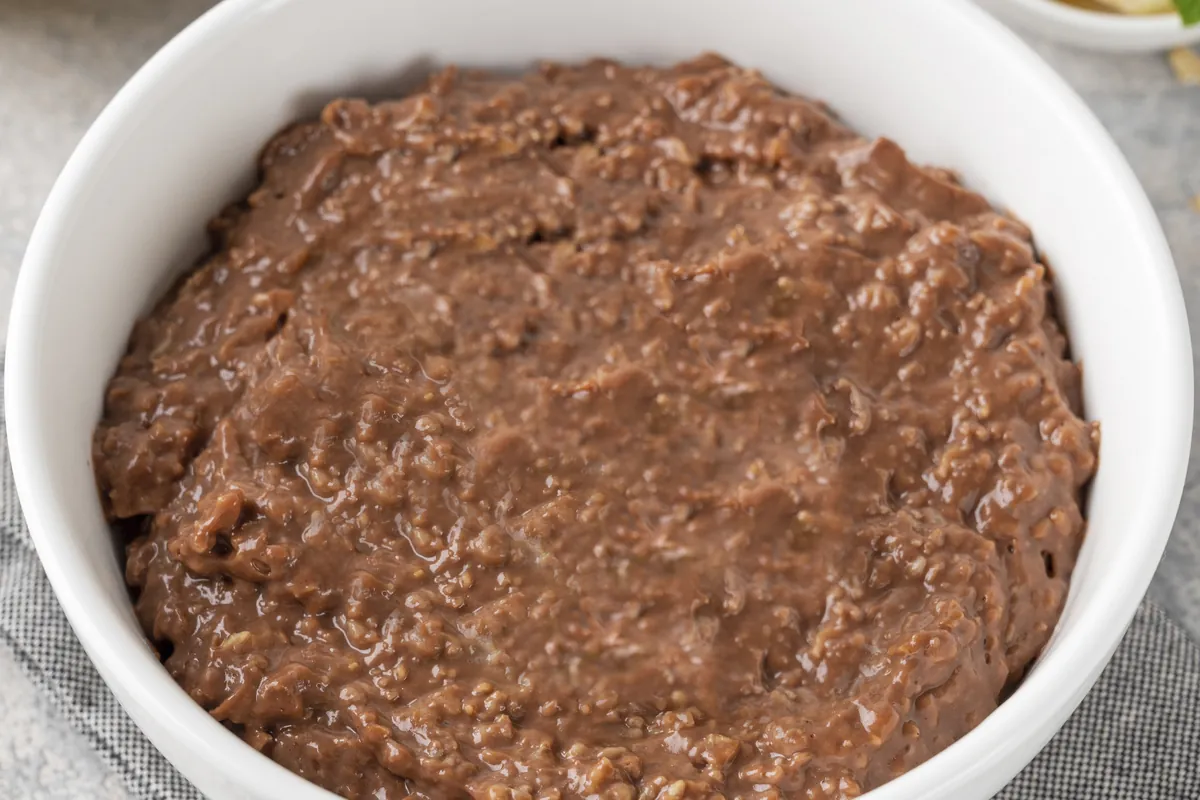
This is the approach used on our Total Plan, our 800 kcal plan. Each day has four products: typically a shake or porridge for breakfast, a soup or hot meal for lunch, a bar mid-afternoon and a shake or meal for the evening. You also get 150ml skimmed milk a day for tea and coffee.
All figures are as prepared, following the instructions on each product page. Shakes made with 250ml skimmed milk unless stated otherwise. Caramel Biscuit and Lemon Cheesecake shakes are made with water, porridge with 170ml skimmed milk, soups with hot water, and hot meals as directed on each product page.
| Day | Breakfast | Lunch | Afternoon | Evening | kcal per day from the four meals as prepared | Protein g |
|---|---|---|---|---|---|---|
| 1 | Original Porridge 200 kcal | Creamy Chicken Soup 201 kcal | Milk Chocolate Bar 201 kcal | Vanilla Shake 212 kcal | 814 | 69.1 |
| 2 | Banana Shake 211 kcal | Vegetable Soup 203 kcal | Crispy Caramel Bar 212 kcal | Beef Chilli Noodles 205 kcal | 831 | 68.9 |
| 3 | Choc Porridge 209 kcal | Chicken & Veg Noodles 201 kcal | Salted Caramel Bar 207 kcal | Strawberry Shake 210 kcal | 827 | 69.7 |
| 4 | Café Latte Shake 212 kcal | Creamy Chicken Soup 201 kcal | Milk Chocolate Bar 201 kcal | Chicken & Veg Noodles 201 kcal | 815 | 67.2 |
| 5 | Original Porridge 200 kcal | Vegetable Soup 203 kcal | Lemon Cheesecake Shake 201 kcal | Spaghetti Bolognese 215 kcal | 819 | 74.2 |
| 6 | Caramel Biscuit Shake 201 kcal | Creamy Chicken Soup 201 kcal | Choc Peanut Bar 212 kcal | Choc Mint Shake 210 kcal | 824 | 67.0 |
| 7 | Vanilla Shake 212 kcal | Beef Chilli Noodles 205 kcal | Muesli & White Choc Bar 222 kcal | Original Porridge 200 kcal | 839 | 71.7 |
Flavours change from time to time, so check the product page before you order.
You can swap any item for another of similar calories from our meal replacement soups, shakes, bars or meals.
You can mix and match shakes, soups, porridge, meals and bars in one order, and because every meal is pre-portioned there is nothing to measure. Single products are £1.99 per meal (shakes, soups, meals) or £2.50 for bars. 30- and 42-meal shake packs bring it down to £1.67 per meal (checked 18 November 2026).
Day 1's soup, porridge and bar, in customers' own words:
“Really enjoy the flavour of this soup & would always order.”
“… Easy to mix and heat, thoroughly yummy and by far my favourite Shake That Weight breakfast product.”
“This tastes like chocolate brownie.”
Reviews independently collected by Reviews.io, checked 18 November 2026. See all reviews
Version B: three meal replacements plus one food meal
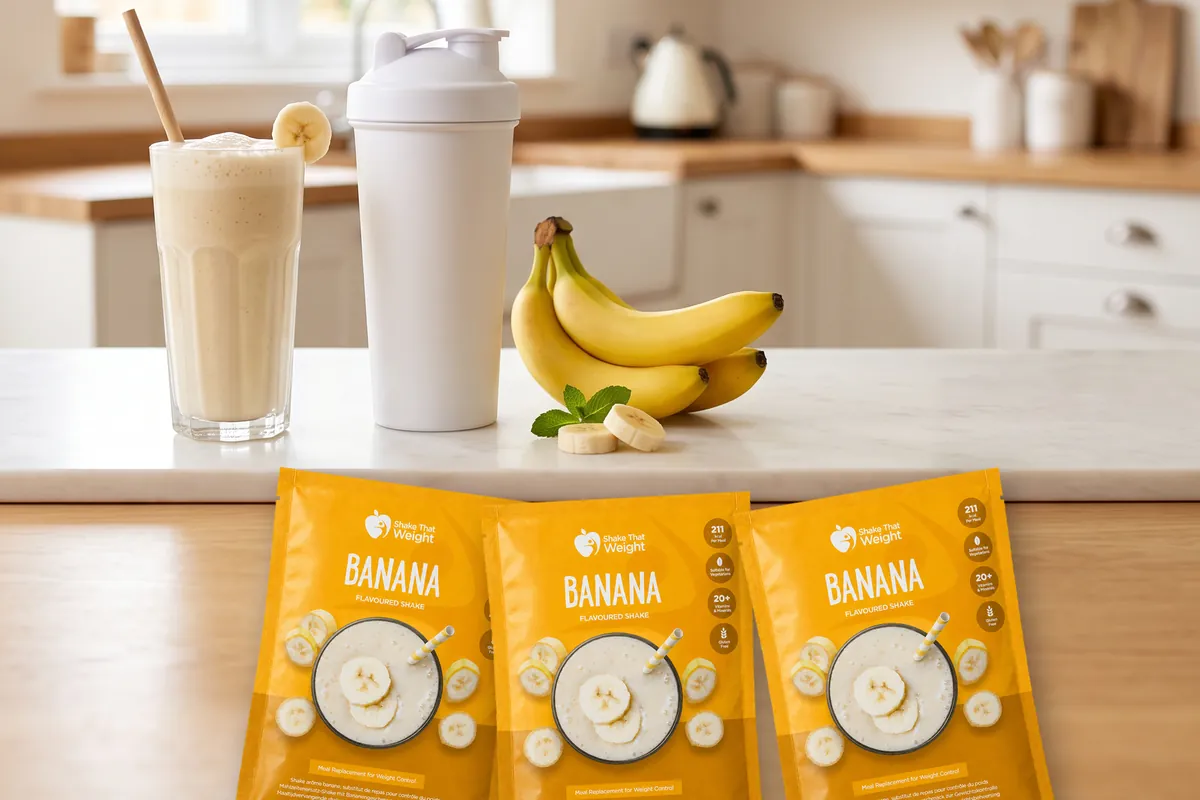
This version uses meal replacements for breakfast, lunch and a snack (about 600 to 640 kcal), then a home-cooked evening meal of about 180 to 200 kcal. It's an illustration of the food-based approach, not an STW product plan.
Build your evening meal from three parts:
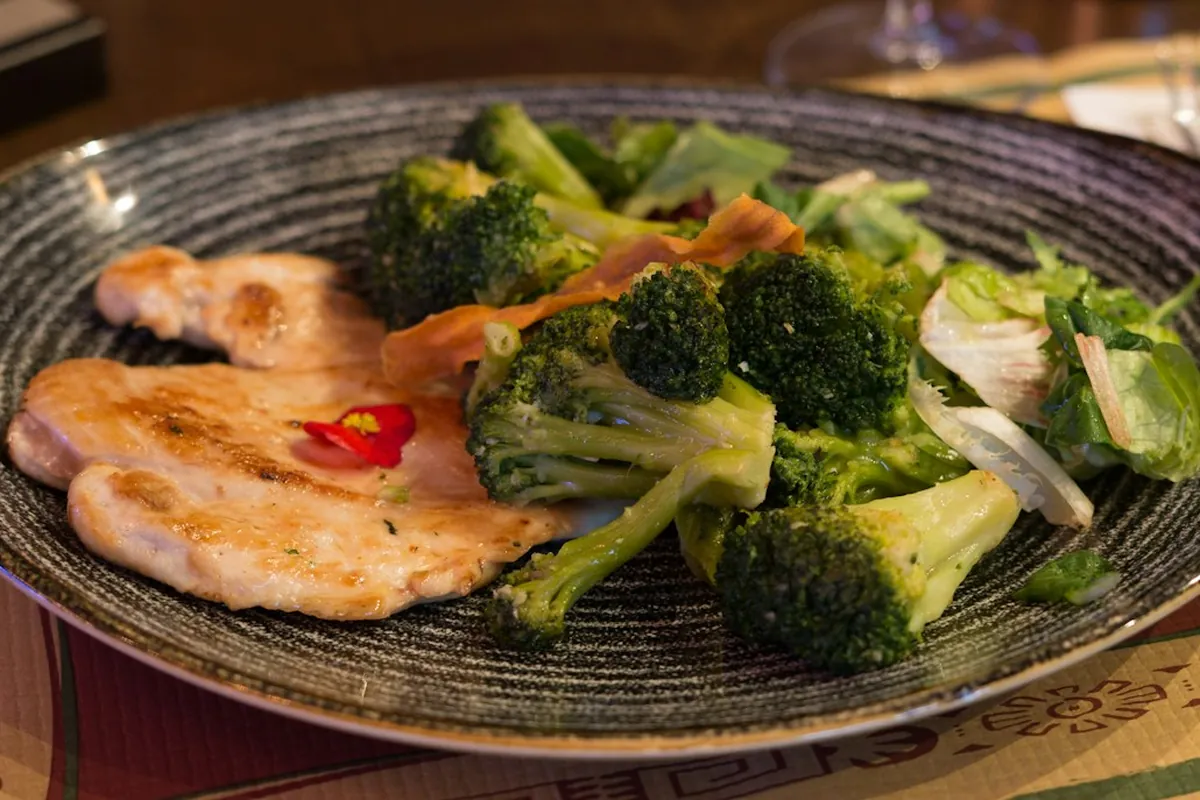
- A palm-sized portion of lean protein (grilled chicken breast, white fish, turkey, tofu)
- A large plate of non-starchy vegetables (broccoli, courgette, peppers, spinach, cauliflower, green beans)
- A small portion of starch if you want it (two boiled new potatoes, 30g cooked brown rice, a slice of wholemeal bread)
A bowl of one of our low calorie soup recipes also fits, at about 185 to 200 kcal.
| Day | Breakfast | Lunch | Afternoon | Evening (food meal, approx 180-200 kcal) | Total kcal (approx) |
|---|---|---|---|---|---|
| 1 | Banana Shake 211 kcal | Creamy Chicken Soup 201 kcal | Milk Chocolate Bar 201 kcal | Grilled skinless chicken breast (80g), steamed broccoli (80g) and boiled courgette (80g), two small boiled new potatoes (50g): about 192 kcal | 805 |
| 2 | Original Porridge 200 kcal | Vegetable Soup 203 kcal | Café Latte Shake 212 kcal | Baked cod fillet (150g), boiled red pepper (100g) and green beans (100g), no starch: about 193 kcal | 808 |
| 3 | Strawberry Shake 210 kcal | Chicken & Veg Noodles 201 kcal | Crispy Caramel Bar 212 kcal | Stir-fried turkey strips (60g), stir-fried mixed vegetables (80g), 30g cooked brown rice: about 189 kcal | 812 |
| 4 | Choc Porridge 209 kcal | Creamy Chicken Soup 201 kcal | Lemon Cheesecake Shake 201 kcal | Grilled skinless chicken breast (65g), mixed salad of lettuce, cucumber and cherry tomatoes (150g) with lemon juice, one slice wholemeal bread (36g): about 199 kcal | 810 |
| 5 | Vanilla Shake 212 kcal | Vegetable Soup 203 kcal | Salted Caramel Bar 207 kcal | Steamed haddock (120g), boiled spinach (80g) and cauliflower (80g), two boiled new potatoes (60g): about 191 kcal | 813 |
| 6 | Caramel Biscuit Shake 201 kcal | Beef Chilli Noodles 205 kcal | Milk Chocolate Bar 201 kcal | Grilled turkey breast fillet (90g), courgette roasted in rapeseed oil (100g), boiled red pepper (80g), no starch: about 192 kcal | 799 |
| 7 | Banana Shake 211 kcal | Creamy Chicken Soup 201 kcal | Muesli & White Choc Bar 222 kcal | Skinless chicken thigh, casseroled (60g), steamed broccoli (80g) and green beans (80g), 20g cooked brown rice: about 182 kcal | 816 |
Evening meal kcal calculated from McCance and Widdowson's Composition of Foods Integrated Dataset8, using cooked weights and no added fat unless the meal says stir-fried or roasted. Meal-replacement figures as prepared, per STW product pages9, checked 10 November 2026.
Everything needs weighing. Use a digital kitchen scale and a calorie-counting app or the McCance and Widdowson tables. Oil, butter and salad dressings all count.
Want to keep one normal meal?
The Everyday Plan is 1,000 kcal a day: two meal replacements, one 400 kcal meal you cook, and 200 kcal of snacks.
Want the fastest structure?
The Total Plan is our 800 kcal plan: four meal replacements a day. Check with your GP first.
Training as well?
The Active Plan is 1,200 kcal a day: two meal replacements, one bigger meal you cook, and a 200 kcal snack, built to pair with 150 minutes of moderate exercise a week.
Coming soon: your 7-day 800 calorie plan (PDF)
We're putting together a downloadable version of this plan. It will include both meal-plan tables, a shopping list, the reintroduction steps and a "Check first" safety checklist.
Who should not follow an 800 calorie diet?
Not everyone can safely follow a plan at this calorie level.
Check first
Speak to your GP before starting an 800 calorie diet if you:
- are pregnant, breastfeeding or have given birth in the last three months
- are under 18
- have a history of eating disorders
- have type 1 diabetes, or type 2 diabetes and take insulin or sulfonylurea medications
- take SGLT2 inhibitors or blood pressure tablets that may need adjusting
- have a BMI under 25
- have a heart condition
- are having cancer treatment
Even with GP clearance, some people experience side effects. In the DROPLET trial, the side effects reported more often with total diet replacement were constipation, tiredness, headaches and dizziness4. NICE also lists hair loss as a risk of very-low-energy diets6.
If you feel faint, persistently unwell or your blood sugar drops too low (if you monitor it), stop and contact your GP.
Speak to your GP too if you take multiple medications. NICE advises reviewing any medicines before starting a diet at this level6.
Good to know
If you go into ketosis, the first few days can bring a metallic taste, bad breath and increased thirst. Drink plenty of water and sugar-free squash. Read more about ketosis symptoms.
How do you come off an 800 calorie diet?
Come off gradually, bringing food back in stages rather than all at once.
The NHS programme supports people to reintroduce food after the 12-week replacement phase1. In the DiRECT trial, stepped food reintroduction took 2 to 8 weeks2.
Our plans offer one way to do this: you step up through them one stage at a time. The plans were designed by a registered dietitian, and they use the same shakes, soups and bars throughout, so the meals stay familiar as food comes back. If you would rather not cook at first, see our guide to low calorie ready meals.
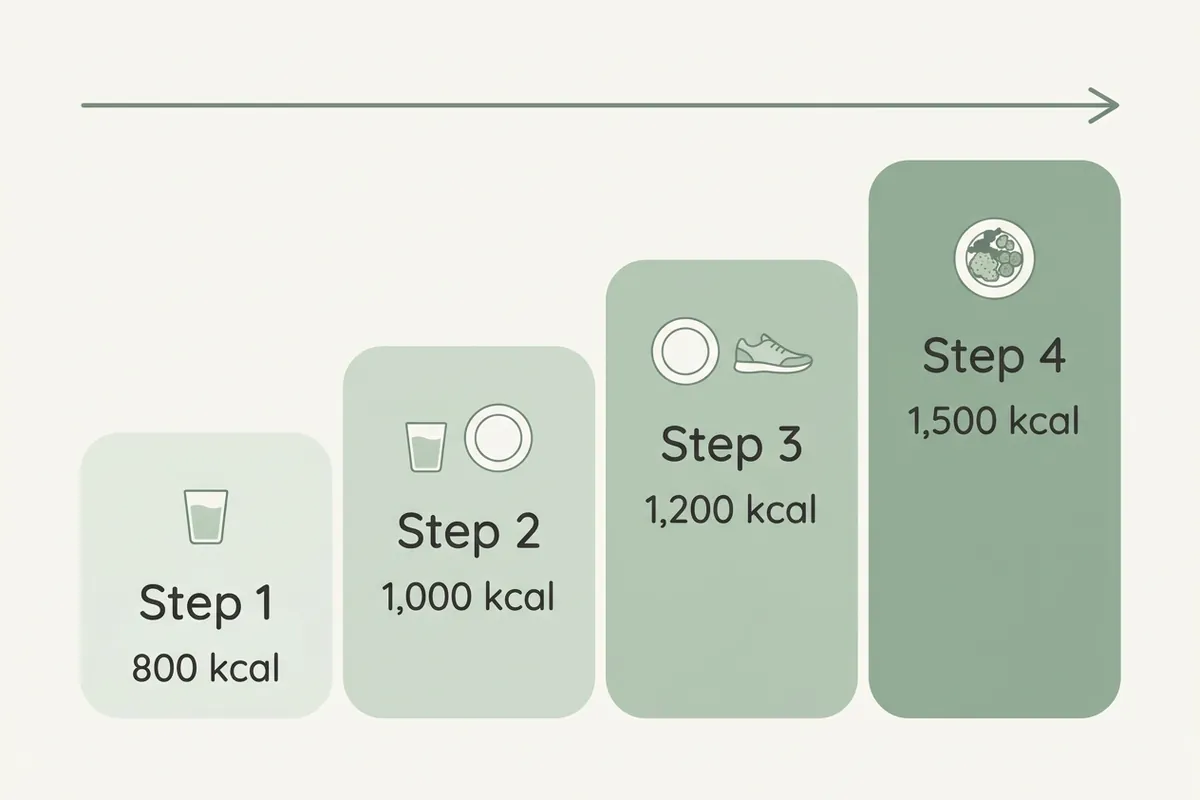
| Step | Plan | Daily kcal | What changes |
|---|---|---|---|
| 1 | Total Plan | 800 | Four meal replacements a day. Check with your GP first. |
| 2 | Everyday Plan | 1,000 | Two meal replacements, one 400 kcal meal you cook, 200 kcal of snacks |
| 3 | Active Plan (if exercising) | 1,200 | Two meal replacements, one bigger meal you cook, a 200 kcal snack |
| 4 | Maintenance Plan | 1,500 | Stages of at least three to four weeks, swapping meal replacements for meals you make yourself |
Moving up one step at a time gives your new habits time to settle. Regain is common after diets at this level3.
Prioritise protein and vegetables first, then add starch gradually. Keep weighing portions for at least the first month.
Substituting one of the main daily meals of an energy restricted diet with a meal replacement contributes to the maintenance of weight after weight loss. Our diet plan guide shows what one or two shakes a day look like.
What if the weight starts to come back? Regain was common in the second year of DiRECT3, so it is nothing to be ashamed of.
If the monthly trend creeps up, stepping back to the plan before (for example from Maintenance to the Everyday Plan) is gentler than going straight back to 800 kcal. Speak to your GP.
Good to know
Your weight may go up slightly in the first week after adding food back. That's common. Day-to-day swings are normal. The important number is the trend over a month.
Is an 800 calorie diet right for you?
It suits some people and not others. It works best for people who want a short, structured plan with a clear end date.
They need to be willing to weigh and track everything if food-based, or accept repetition if meal-replacement. GP support is essential.
It doesn't suit people who need flexibility, who have a complicated relationship with food or restriction, who dislike the format, or who can't get medical clearance.
If 800 feels too low or too rigid, our Everyday Plan at 1,000 kcal keeps one meal you cook. It's a gentler place to start. You can see all our diet plans on the hub page.
Whatever you choose, the plan is only the start. What you do in the reintroduction phase and the months afterwards makes a big difference to keeping the weight off.
Start with the Everyday Plan
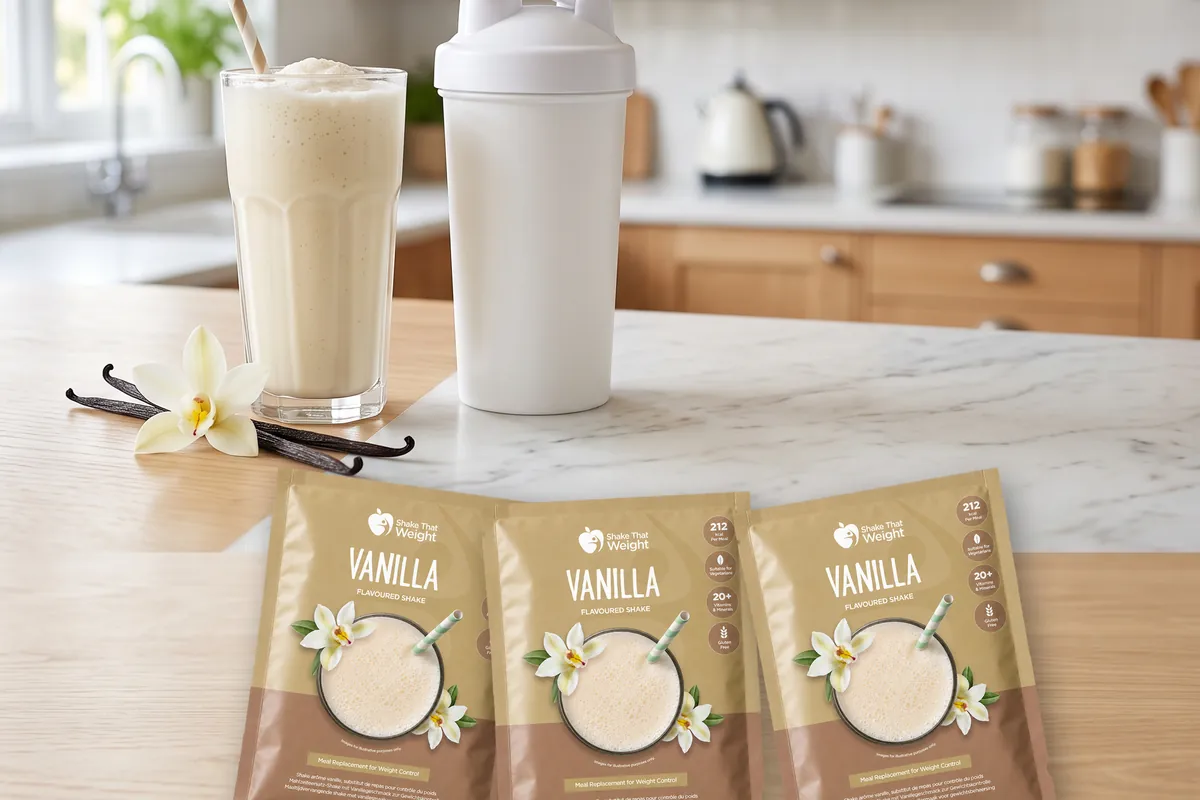
Two meal replacements, one meal you cook and 200 kcal of snacks makes 1,000 kcal a day, for 8 weeks. Substituting two of the main daily meals of an energy restricted diet with meal replacements contributes to weight loss.
You pay £1.67 a meal in 30- and 42-meal shake packs, and you get free standard delivery over £65.
Thinking about the 800 kcal Total Plan? Speak to your GP before you start.

How long can I follow an 800 calorie diet?
Can I exercise on 800 calories a day?
Will I feel hungry on an 800 calorie diet?
Can I drink alcohol or coffee?
Is the NHS 800 calorie diet free?
Can I do an 800 calorie diet on weight-loss injections?
What's the difference between an 800 calorie deficit and eating 800 calories?
Sources
- NHS England. NHS Type 2 Diabetes Path to Remission Programme. https://www.england.nhs.uk/diabetes/treatment-care/diabetes-remission/, accessed 10 November 2026.
- Lean MEJ, Leslie WS, Barnes AC, et al. Primary care-led weight management for remission of type 2 diabetes (DiRECT): an open-label, cluster-randomised trial. The Lancet. 2018;391(10120):541-551. https://pubmed.ncbi.nlm.nih.gov/29221645/, accessed 10 November 2026.
- Lean MEJ, Leslie WS, Barnes AC, et al. Durability of a primary care-led weight-management intervention for remission of type 2 diabetes: 2-year results of the DiRECT open-label, cluster-randomised trial. The Lancet Diabetes & Endocrinology. 2019;7(5):344-355. https://pubmed.ncbi.nlm.nih.gov/30852132/, accessed 10 November 2026.
- Astbury NM, Aveyard P, Nickless A, et al. Doctor Referral of Overweight People to Low Energy total diet replacement Treatment (DROPLET): pragmatic randomised controlled trial. BMJ. 2018;362:k3760. https://pubmed.ncbi.nlm.nih.gov/30257983/, accessed 10 November 2026.
- Valabhji J, Gorton T, Barron E, et al. Early findings from the NHS Type 2 Diabetes Path to Remission Programme: a prospective evaluation of real-world implementation. The Lancet Diabetes & Endocrinology. 2024;12(9):653-663. https://doi.org/10.1016/S2213-8587(24)00194-3, accessed 10 November 2026.
- National Institute for Health and Care Excellence. Overweight and obesity management (NG246), Physical activity and diet, recommendations 1.16.8 to 1.16.12. https://www.nice.org.uk/guidance/ng246/chapter/physical-activity-and-diet, accessed 10 November 2026.
- Diabetes UK. Meal replacement plans for type 2 diabetes remission (content last reviewed 29 January 2024). https://www.diabetes.org.uk/about-diabetes/type-2-diabetes/remission/meal-replacement-plans-for-remission, accessed 10 November 2026.
- Office for Health Improvement and Disparities. McCance and Widdowson's Composition of Foods Integrated Dataset (CoFID), 2021. https://www.gov.uk/government/publications/composition-of-foods-integrated-dataset-cofid, accessed 10 November 2026.
- Shake That Weight. Product, plan and service pages (shakes, soups, porridge, meals, bars, Total Plan, Everyday Plan, Diet plans, Reviews (Reviews.io), Delivery). https://www.shakethatweight.co.uk/total-food-replacement-plan/, checked 18 November 2026.
Last updated: 18 November 2026.
Written by the Shake That Weight team and reviewed by Matthew Cooper, Director and Founder. Read our editorial standards.
This article is for information only. It is not medical advice. Always speak to your GP before starting any very low-calorie diet. See our medical and health disclaimer.