
Rated 4.51 from 20,443 reviews · 500,000+ customers
The NHS Soups and Shakes Diet: Who Qualifies and How to Get On It
The NHS soups and shakes diet is the informal name for the NHS Type 2 Diabetes Path to Remission Programme. It is a 12-month plan built around 12 weeks of nutritionally complete soups and shakes, then food reintroduction and maintenance. The NHS version is free but has strict eligibility criteria and a GP referral. The same type of plan is also available privately — with no referral — using our products.
Shake That Weight is a regulated UK food company. Our soups and shakes are made under BRC-certified manufacturing and meet the UK regulations covering meal replacement and total food replacement. We don’t currently supply the NHS directly — this guide explains how the programme is accessed through your GP.
If you have type 2 diabetes, speak to your GP before starting this type of plan at home — diabetes medication often needs adjusting on a very low calorie diet, with a real risk of hypoglycaemia if the doses aren’t reviewed.
NHS eligibility and programme details on this page were checked against NHS England guidance on 7 October 2026.
At a glance
- Official name
- NHS Type 2 Diabetes Path to Remission Programme (NHS England and Diabetes UK); informally, the “soups and shakes diet”
- Who it’s for
- Adults aged 18–65 diagnosed with type 2 diabetes in the last 6 years, meeting the other criteria below
- Length
- 12 months: 12 weeks of soups and shakes only, 6 weeks of food reintroduction, then 7–8 months of maintenance support
- Calories
- 800–900 kcal a day in the first phase
- Cost
- Free to the patient
- How to get on it
- Referral from your GP practice or diabetes team only; there is no self-referral. England only, and availability varies locally
- Private alternative
- The same type of plan is available with our products, with no referral and no eligibility test
- If you have type 2 diabetes
- Speak to your GP first; diabetes medication often needs adjusting on a very low calorie diet
What is the NHS soups and shakes diet?
The NHS soups and shakes diet is the informal name for the NHS Type 2 Diabetes Path to Remission Programme, a joint initiative between NHS England and Diabetes UK. For 12 weeks, eligible adults replace all normal meals with nutritionally complete soups and shakes. The whole programme lasts 12 months and includes individual coaching throughout.
NHS England uses the “soups and shakes” name itself, and the programme has been available across England since April 2024. Remission of type 2 diabetes is its aim; the research behind that is covered on our page about reversing type 2 diabetes. This page covers who qualifies, how to get on it, and how to do the same type of plan privately with our products if you don’t. The diet itself — total meal replacement at around 800 kcal a day with soups and shakes — is a defined category of food under GB regulations, and our own soups and shakes are manufactured to those same regulations.
To be plain: Shake That Weight is a private company with no part in the NHS programme. Nothing we sell is NHS-approved or NHS-endorsed.
Who qualifies for the NHS soups and shakes diet?
To qualify nationally, you must be aged 18 to 65, diagnosed with type 2 diabetes within the last six years, and have a BMI over 27 (over 25 if you are from a Black, Asian or other minority ethnic group). You must also not currently use insulin and be registered with a GP practice in a participating area.
The full national criteria:
- Aged 18–65
- Type 2 diabetes diagnosed within the last 6 years
- BMI over 27 kg/m² (over 25 kg/m² for people from Black, Asian and other minority ethnic groups)
- Registered with a GP practice in a participating area
- Not currently using insulin
- Not pregnant, not planning pregnancy within the next 12 months, and not breastfeeding
- No previous or pending bariatric surgery
- Able to commit to a 12-month programme
- Willing to be coached individually, in person or through an app
- Comfortable with only soups and shakes for the first 12 weeks
Local criteria exist too, and they vary. Local NHS areas (integrated care boards) add clinical requirements to referral forms, such as a recent HbA1c result within a set range, an up-to-date diabetes review including retinal screening, and exclusions like active cancer, a recent heart attack or stroke, severe heart failure, severe kidney or liver disease, an eating disorder or untreated proliferative retinopathy.
How do you get on the programme?
You can only join through a referral from your GP practice or diabetes team. There is no self-referral and no way to pay your way on. Your clinician submits a local referral form, and availability depends on your local NHS area.
That route is the NHS version specifically. The same type of plan is also available privately with our products, without a referral or eligibility test — covered further down this page.
Check the criteria
Go through the list above and note the date you were diagnosed.
Book the conversation
Raise it at your next diabetes review or book a routine appointment. Bring your diagnosis date, current medicines and latest HbA1c result if you have one.
Ask directly
Say: “I’d like to be considered for the NHS Type 2 Diabetes Path to Remission Programme. Is it available in our area, and do I meet the local criteria?”
Ask what happens next
If you’re eligible, your clinician sends the referral. If not, ask which criterion you missed and what other support exists.
What do you eat on it?
In the first 12 weeks you replace all your normal meals with soups and shakes, on 800 to 900 calories a day. The products are nutritionally complete and supplied as part of the programme. After 12 weeks, normal food is reintroduced step by step.
People often search for the menu and flavours. We can’t list them, because the products come through the programme and not from us. Your programme provider will tell you what you will be given.
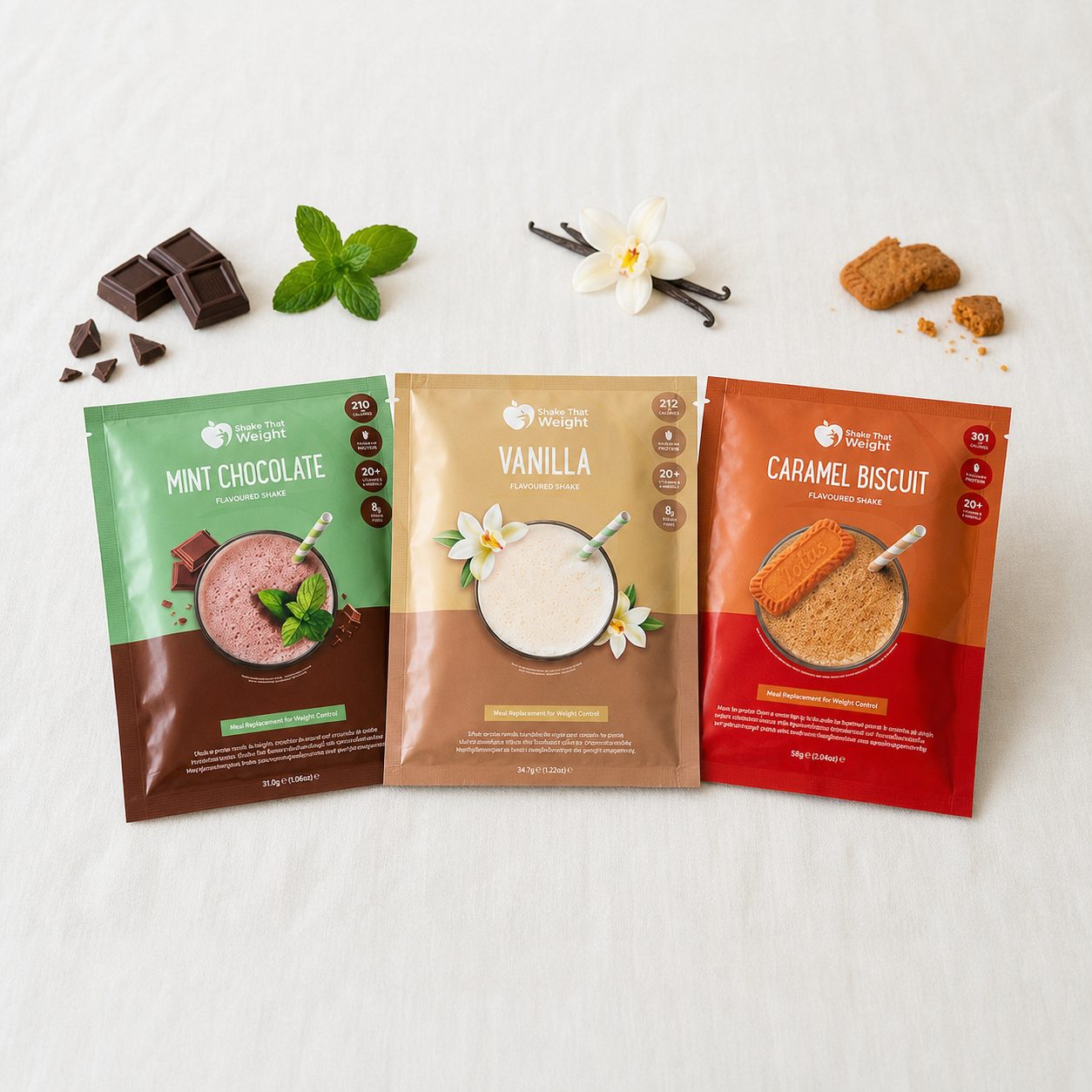
If you do this type of plan privately, our own soups and shakes are what you would eat. Each meal is 200–250 kcal, high in protein, with over 20 vitamins and minerals and under 30% of calories from fat. Browse our shakes and soups to see the current range.
This phase means no ordinary meals, with a coach supporting you in person or through an app. If you are on the programme, follow your coach’s advice over anything on a website, ours included.
What happens after the 12 weeks?
After 12 weeks of soups and shakes, you move into 6 weeks of stepped food reintroduction, with personalised advice and meal plans. You then get 7 to 8 months of maintenance support, taking the programme to 12 months in total.
Most summaries stop at the 12 weeks, but the programme is built as three phases. The second brings ordinary meals back in a planned way; the third supports you once the structure falls away.
Phase 1
12 weeks
Soups and shakes only, at 800–900 kcal a day.
Phase 2
6 weeks
Stepped food reintroduction, with personalised advice and meal plans.
Phase 3
7–8 months
Maintenance support, taking the programme to 12 months in total.
When the 12 months end, programme support ends with it. Keeping weight off long-term is a separate task with its own daily routines — some people stay close to the structured pattern they finished the programme on, and some don’t. Our Maintenance Plan is one option for that stage: 1,500 kcal a day, built for keeping weight off after a reset, with the free MyJurnee app behind it. If you’re on the NHS programme, follow your coach over anything else; this is for later, if you want it.
Any evidence for remission belongs to the NHS programme and the published research, not to any product we sell. Our page on reversing type 2 diabetes sets out that research.
Can you buy the NHS soups and shakes diet?
The NHS programme’s branded products aren’t sold directly to the public — those come through the programme itself. But the diet itself — total meal replacement at around 800 kcal a day with soups and shakes — is a defined category of food under GB regulations. Our soups and shakes are manufactured to those same regulations, so you can do the same type of plan at home with our products. There is no referral and no eligibility test; what you lose is the NHS clinical support and coaching, so your GP needs to be your first stop if you take any diabetes medication.
Doing it privately means buying the products yourself, following your own plan at home, and keeping your GP involved — particularly if you take diabetes medication, since it often needs adjusting when you eat much less, with a real risk of hypoglycaemia if the doses aren’t reviewed. The NHS version is free if you qualify; the private route is paid for by you and starts whenever you order.
Built on half a million journeys
Numbers from independent Reviews.io data and our customer database — updated monthly.
As featured in
Daily Mail
Womens Health
The Telegraph
Cosmopolitan
Doing this diet privately — what you need to know
The private route to this type of plan is open to anyone, whether you qualify for the NHS version or not. There is no referral and no eligibility list — what you need is your GP’s involvement before you start, particularly if you take diabetes medication, because it often needs adjusting when you eat much less. Many readers of this page will not qualify for the NHS version in any case: over 65, diagnosed more than six years ago, using insulin, prediabetic, or living in an area that doesn’t commission the programme.
Talk to your GP or diabetes team before you start a very low calorie diet outside the NHS programme. This matters most if you take diabetes medication, because it often needs adjusting when you eat much less.
If your GP is happy for you to go ahead, a private total diet replacement plan is one option. Our shakes and soups are 200–250 kcal per meal, high in protein, with over 20 vitamins and minerals and under 30% of calories from fat. Our Total Plan is 800 kcal a day, replacing all meals. Our products are formulated to meet the conditions of use for the authorised ‘meal replacement for weight control’ claims under Regulation 432/2012 as amended by (EU) 2016/1413, and comply with The Foods Intended for Use in Energy Restricted Diets for Weight Reduction Regulations 1997 — the regulations that currently govern total food replacement products in Great Britain.
A private plan is not the NHS programme. Here is an honest comparison.
NHS programme or a private plan: how they compare
| Feature | NHS Path to Remission Programme | Private total diet replacement plan (including ours) |
|---|---|---|
| Cost | Free to the patient; products supplied | You pay for the products |
| Who can join | Adults meeting national and local criteria, by referral | Anyone can buy; whether it suits you is for your GP |
| Clinical oversight | Run through your GP practice or diabetes team, with clinicians and coaches | None built in; you arrange your own GP check-ins |
| Coaching | Individual coaching, in person or by app | Self-directed; our free MyJurnee app has a habit course, daily tools and trackers |
| Diabetes medication | Your existing care team is involved | You need to raise it with your GP before you start |
| Structure | Three set phases over 12 months | You choose; our Maintenance Plan is 1,500 kcal a day |
For some readers, cost (not eligibility) is the deciding factor: the NHS version is free; the private route is paid for by you. If you have diabetes, our meal replacement range for people with diabetes is a starting point, alongside your GP’s advice.
Not eligible, and your GP is happy for you to go ahead?
Our total food replacement plan is a private plan, separate from the NHS programme. See how it works and ask us anything about the products before you order.
30-day flavour guarantee · Free UK delivery over £65 · Rated 4.51 from 20,443 reviews
How do you do a total diet replacement plan safely?
Speak to your GP or diabetes team before starting, particularly if you take diabetes medication, which often needs adjusting when you eat much less. A very low calorie diet is not suitable for everyone, so get medical advice first and keep your GP involved.
Who shouldn’t do it without medical supervision. The programme’s exclusions, listed earlier on this page, are a useful guide: pregnancy, breastfeeding, an eating disorder, and serious heart, kidney, liver or cancer-related conditions among them. Our plans are for adults only.
What to expect in the first week. Your eating pattern changes completely. Some people feel tired, light-headed or headachy, or notice changes in digestion, as they adjust; our guide explains what ketosis is. Drink plenty of fluids. Contact your GP if symptoms are severe or don’t settle, and straight away if you feel faint, confused or very unwell.
Questions about our products? Contact us. We can’t give medical advice; your GP or diabetes team can.
Can I get the NHS soups and shakes diet in Scotland, Wales or Northern Ireland?
What if I was diagnosed with type 2 diabetes more than six years ago?
Can I do the NHS soups and shakes diet if I’m prediabetic?
Can I do it if I’m on insulin?
Is there a cost?
How much support do you get on the programme?
What if my GP says no?
Can I do the NHS soups and shakes diet if I’m over 65?
Can you buy the NHS soup and shake diet?
Is Shake That Weight part of the NHS programme?
What should you do next?
There are two routes to the same type of plan. If you qualify and want it free, your GP practice or diabetes team is the way in. If you don’t qualify, or you’d rather run it yourself without the wait, the private route with our products starts whenever you order.
If you take diabetes medication, speak to your GP first — it often needs adjusting on a very low calorie diet.
Looking for our discount for people who work for the NHS or emergency services? That is a separate staff discount, unrelated to the programme on this page: NHS and emergency services discount.