
Breakfast
Porridge, pancakes, muesli and omelettes that set the day up properly
low in calories, high in protein, with 20+ vitamins and minerals.
- ✓High protein
- ✓20+ vits & mins
- ✓Low calorie
2 items
-
 Clearance
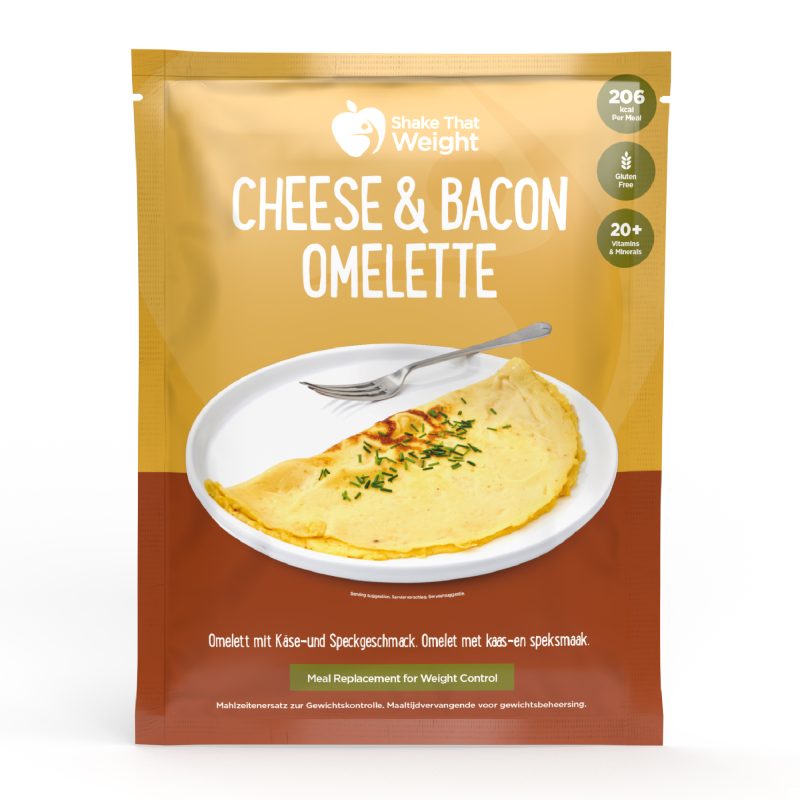
Cheese and Bacon Omelette
★★★★★ ★★★★★ (25) Rated 4.2 out of 5 from 25 reviews£1.99Original price was: £1.99.£0.80Current price is: £0.80. -
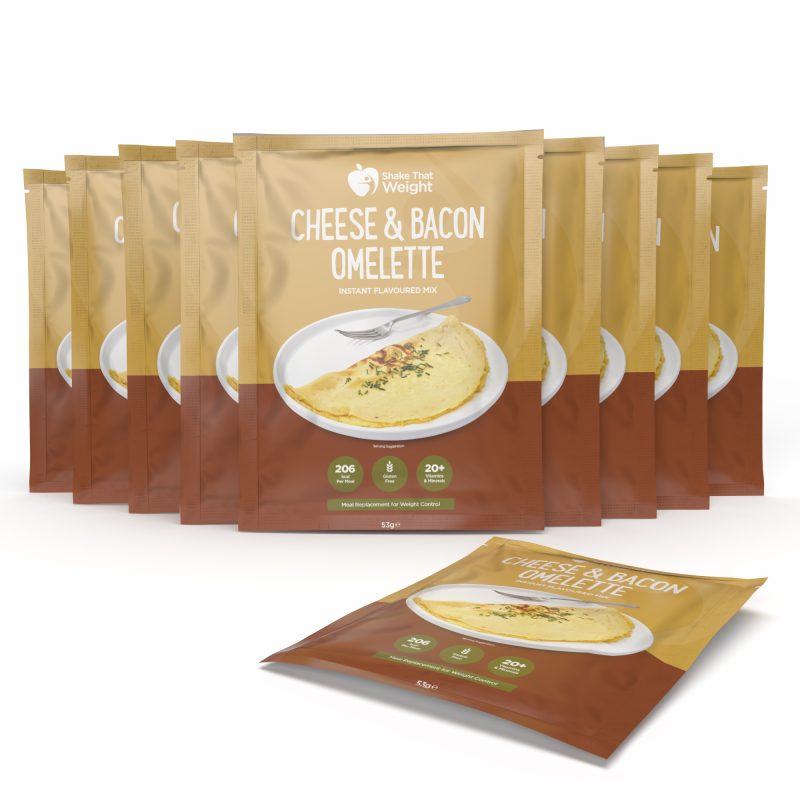
Cheese and Bacon Omelette - 10 Meals
★★★★★ ★★★★★ (8) Rated 4.3 out of 5 from 8 reviews£19.99Original price was: £19.99.£8.00Current price is: £8.00.
Filter & Sort
Sort by
Dietary
Breakfast that holds until lunch
The short version
- All seven breakfasts run 200–235 kcal with 16.1–18.4g of protein and 23 added vitamins and minerals.
- The three porridge flavours are a high protein porridge in their own right — no protein powder to stir in.
- A diet breakfast like this swaps in for your usual bowl of porridge or cereal in under two minutes.
- Prices start from £0.72 a breakfast, with free UK delivery over £65 and a 30-day flavour guarantee.
- Breakfast slots into the Total Plan or works as a single daily swap on its own.
- It's a practical low calorie breakfast whether or not you're on a weight loss injection.
Is porridge good for weight loss?
Yes — our porridge is formulated specifically to support weight loss, within the legal specification for a meal replacement, not just because it is a lower-calorie bowl of oats.
All three porridge flavours fall inside the official calorie band for a meal replacement (200–250 kcal) at 200–209 kcal, each carrying 17.6g to 18.4g of protein and 23 added vitamins and minerals. The authorised health claim for products formulated to this specification is: "Replacing two daily meals of an energy-restricted diet with meal replacements contributes to weight loss, and replacing one contributes to maintaining weight after weight loss." That is the basis on which we can say our porridge supports weight loss — not a general claim about porridge as a food.
A standard bowl of porridge is not built to that specification. Made with a generous 250ml of milk it runs to around 278 kcal with roughly 14g of protein, and the actual calorie count depends on how much milk goes in and how heaped the bowl is. Porridge made this way can still fit comfortably inside a weight loss diet — oats are a perfectly good food — the difference is that ours is formulated to a fixed calorie and protein target before you even open the sachet, so there is no portion to estimate and no arithmetic to get right.
High protein porridge, without the protein powder
All three porridge flavours are a high protein porridge, formulated with protein oats already blended in — no powder to stir through, no recipe, no scales.
Most people building a high protein breakfast add a scoop of whey or a spoon of protein powder to an ordinary bowl of oats, then measure the water, stir until the lumps are gone, and hope the ratio is right. Ours skips that step entirely. Original Porridge Oats carries 18.4g of protein at 200 kcal, Chocolate Porridge 18.3g at 209 kcal, and Apple Cinnamon Porridge 17.6g at 200 kcal — the protein blend is mixed in before the sachet is ever sealed, so there is nothing left for you to add, weigh or stir in yourself.
That matters because protein powder stirred into porridge is notoriously easy to get wrong: too little and it does nothing, too much and the texture turns chalky or the porridge thickens unpleasantly as it cools. A pre-formulated protein oats sachet removes that guesswork along with the washing-up of a second scoop and a second container. Add water or milk, stir, and the protein content is fixed before you start — not estimated.
That's the practical difference between buying a high protein porridge and building one yourself: the formulation work is already done, at a calorie count that still sits well inside a diet breakfast.
How a diet breakfast compares to porridge or cereal
A Shake That Weight breakfast runs 200–235 kcal with 16.1–18.4g of protein and 23 added vitamins and minerals; a bowl of porridge made with a generous splash of milk runs nearer 278 kcal with about 14g of protein, and a bowl of cereal carries a fraction of that protein. Both are reasonable breakfasts — the difference is in the specification.
A Shake That Weight breakfast
- Calories: 200–235 kcal, formulated as a complete meal
- Protein: 16.1–18.4g per serving
- Carbohydrate: 16.9–25.6g per serving
- Added vitamins and minerals: 23, covering a defined share of daily Reference Intake
- Portion control: one sachet is one meal, no scale or recipe decision to make
A typical bowl of porridge or cereal
- Calories: around 278 kcal for 40g of oats made with 250ml of semi-skimmed milk
- Protein: around 14g with 250ml of milk, closer to 8g with only a splash
- Carbohydrate: around 39.7g for the same oats-and-milk serving
- Added vitamins and minerals: a standard cereal is fortified, typically around 7 vitamins plus iron
- Portion control: bowl size and milk splash are down to judgement each morning
Plain oats are a genuinely good whole food, and a fortified cereal does more than people often credit. Neither is formulated to a fixed calorie and protein target the way a diet breakfast is, and the serving size moves with how generous the pour is.
That variability is what a low calorie breakfast is designed to remove. A Shake That Weight breakfast delivers the same 200–235 kcal and the same protein figure every morning — harder to repeat from a box of cereal or a bag of oats measured by eye.
Why breakfast is the easiest meal to replace
Breakfast is habit rather than decision — you eat roughly the same thing at roughly the same time every day. That makes it the simplest meal to swap, and the swap that sticks longest. Each of ours is 200–235 kcal with 20+ vitamins and minerals, so the day starts in deficit without starting hungry.
What is in the range
Porridge in Original, Chocolate and Apple Cinnamon; Maple Syrup Pancakes; Chocolate Caramel Muesli; Mixed Berry Yoghurt with Muesli; and a Cheese & Bacon Omelette for anyone who would rather start savoury. The Variety Breakfast Bundle is the sensible first order if you do not yet know which you prefer, and our 30-day flavour guarantee covers you if one is not to your taste.
How long it takes
Add water or milk as the pack directs, stir, wait a minute or two. There is nothing to weigh, nothing to cook and nothing to wash beyond a bowl — which is the point, because the breakfasts people skip are the ones that need effort at 7am.
What 23 vitamins and minerals actually means
Reference Intake (RI) is the official UK guide to how much of each vitamin and mineral an adult needs in a day, and each breakfast is formulated to deliver a defined share of 23 of them in one sachet. That is a specification, not a garnish.
A bowl of oats is not formulated to cover anything. Oats bring their own natural nutrients, but nobody has set out to hit a defined percentage of RI for 23 separate vitamins and minerals in that bowl — the figure simply is whatever the oats happen to contain.
A meal replacement breakfast works the other way round: the 23 vitamins and minerals are specified first, then the recipe is built to deliver them at a fixed calorie count. The same approach runs through our meal replacement shakes.
Protein first thing, and why it matters
These are high in protein — between 16.1 and 18.4g a serving — which is what stops an 11am biscuit becoming inevitable. A low-calorie breakfast that leaves you ravenous by mid-morning costs you more calories than it saves, so satiety is doing the real work here.
Fitting breakfast into your plan
On the Everyday Plan and the Active Plan, breakfast is normally the first of your meal replacements. On a 5:2 fasting day it is what makes the morning manageable. See how the plans work if you are still deciding.
Making it your own
Several of the breakfasts take additions well — berries stirred into the porridge, a little fruit with the pancakes. Keep any additions modest and count them; the calorie figures above are for the sachet as supplied.
Breakfast alongside a weight loss injection
Appetite is often at its lowest first thing in the morning for anyone on a weight loss injection, which makes breakfast the meal people skip altogether — and a 200 kcal breakfast carrying 16–18g of protein and 23 vitamins and minerals is a practical way to not skip it.
Skipping breakfast entirely is different from eating a small one. A small, nutritionally complete breakfast still delivers protein and micronutrients you need that day; an empty morning delivers none of it. When appetite is already reduced, a 200 kcal serving is realistic in a way a full cooked breakfast is not.
This is a question for food, not medication — always follow your prescriber's guidance on the injection itself. Alongside that, a diet breakfast or a meal replacement bar that takes a minute to prepare is easier to manage than a meal that needs appetite to get through. See our GLP-1 Support Meals range.
Diet Breakfast Q&As
Can I make the porridge with milk instead of water?
You can, but it changes the calories. The figure on each product page is for the sachet made as directed — the Apple Cinnamon Porridge, for instance, is 200 calories made with 150ml of skimmed milk. If you use whole milk, count it — on a 1,000 kcal Everyday Plan day, a splash is not a rounding error.
Will a 200 kcal breakfast actually keep me going?
For most people, yes, because these are high in protein rather than fast carbohydrate. The first week is the hardest while your appetite adjusts; after that, mid-morning hunger usually settles.
Can I have a diet breakfast every day?
Yes. Breakfast is the meal most people replace every single day, precisely because it is the least interesting one to think about. Rotate two or three flavours so you do not tire of it.
What if I do not like sweet things in the morning?
Have the Cheese and Bacon Omelette. At 206 calories it is the savoury option in the range, and it works for people who find a sweet breakfast cloying — you can scramble the mixture instead of leaving it to set if you prefer.
How much protein is in your porridge?
Our three porridge flavours carry 17.6g to 18.4g of protein per serving: Original Porridge Oats has 18.4g at 200 kcal, Chocolate Porridge 18.3g at 209 kcal, and Apple Cinnamon Porridge 17.6g at 200 kcal. That makes all three a high protein porridge, with the protein blend already in the sachet rather than added separately.
Is this better than normal porridge oats or cereal?
It depends what you want from breakfast. Against supermarket porridge oats, ours carries more protein per serving and 23 added vitamins and minerals, where plain oats add none. Against a standard breakfast cereal, which is fortified with around 7 vitamins plus iron, the difference is breadth — 23 rather than around 7 — plus a higher protein content. Oats and fortified cereal both have a place; ours is formulated specifically as a low calorie, high protein breakfast.
Can I have a diet breakfast if I'm not on a full plan?
Yes. A diet breakfast works perfectly well on its own, swapped in for whatever you would normally eat first thing — you do not need to be following a full plan for the rest of the day. Many people start exactly this way, simply because breakfast is the easiest meal to change and the swap that tends to stick.
